The towing industry hasn’t traditionally been associated with environmental responsibility. Heavy trucks, diesel engines, long-distance hauls – it’s a sector built on power and reliability, not emissions targets.
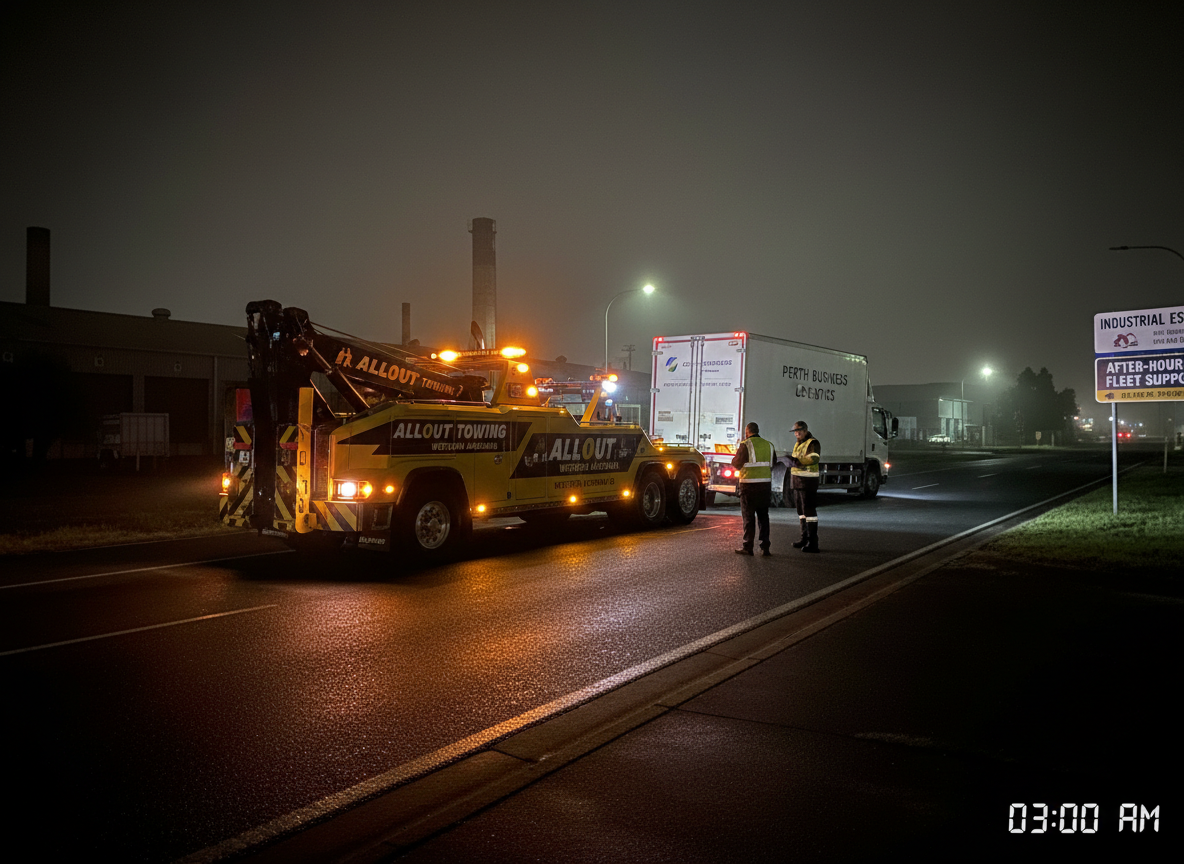
But that’s changing fast in Perth, and operators who ignore the shift risk being left behind. We’re seeing real momentum towards green towing Perth practices that reduce carbon footprints without compromising the 24/7 reliability our customers depend on when their car breaks down at 2am or their excavator needs moving across the metro area.
This isn’t about virtue signalling or ticking compliance boxes. It’s about recognising that fuel efficiency, route optimisation, and smarter vehicle choices deliver measurable cost savings whilst cutting emissions. The two goals align more often than you’d think.
Why the Towing Industry Is Under Pressure to Change
Transport accounts for roughly 18% of Australia’s total greenhouse gas emissions, and heavy vehicles contribute a disproportionate share relative to their numbers on the road. Towing operators, who run large diesel trucks often carrying additional weight, sit squarely in the spotlight.
Perth’s geography compounds the challenge. Our sprawling metro area means longer average tow distances compared to more compact cities. A callout from Joondalup to Fremantle can easily clock 50+ kilometres one way, and that’s before factoring in the return trip or the next job.
Public and regulatory expectations are rising too. The WA Government has committed to net-zero emissions by 2050, and whilst specific mandates for towing operators haven’t arrived yet, the writing’s on the wall. Fleet operators across all sectors are being asked – and will eventually be required – to demonstrate emissions reduction strategies.
But here’s the thing: waiting for regulation misses the immediate business case. Fuel is one of the largest operating costs for any towing company. Anything that cuts diesel consumption by even 10-15% flows straight to the bottom line.
How Modern Towing Fleets Are Cutting Emissions
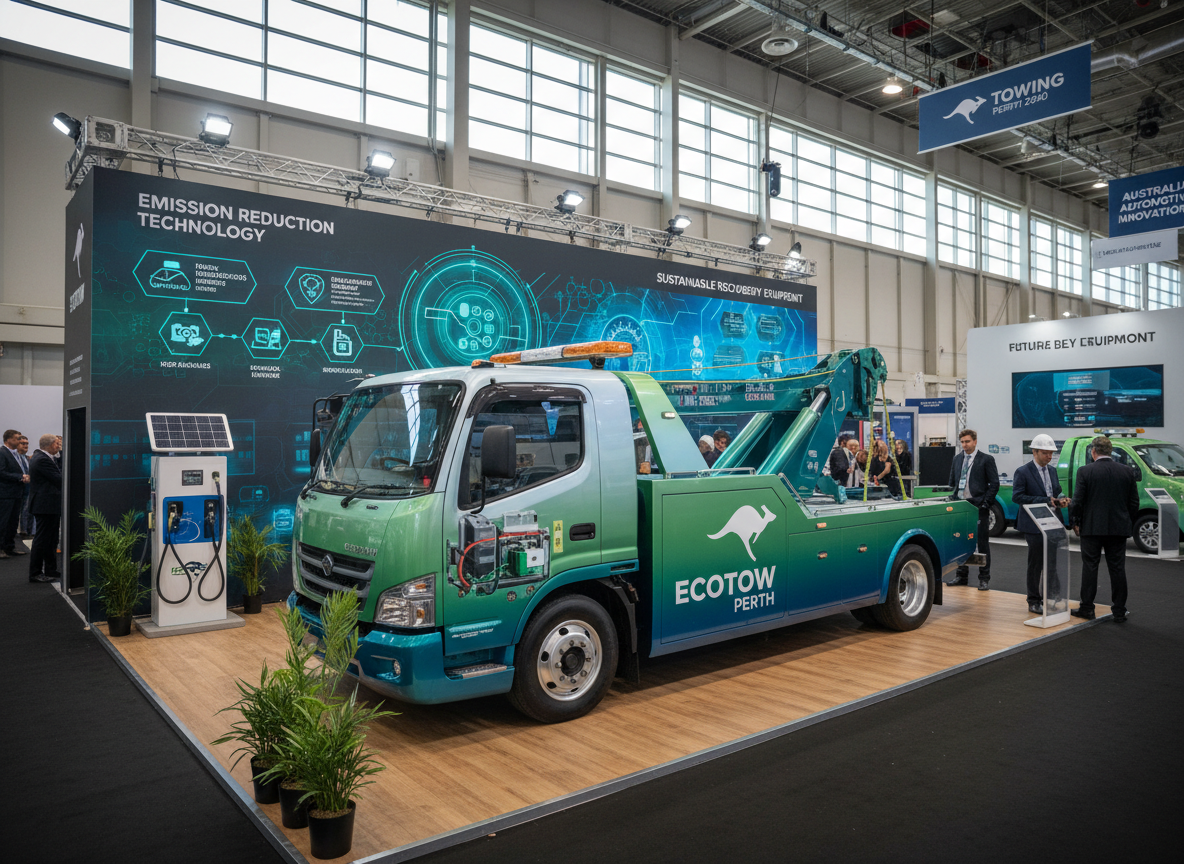
Green towing Perth operators are pursuing multiple strategies simultaneously, because no single change delivers the transformation needed. It’s the cumulative effect of smarter choices across fleet composition, operations, and maintenance that moves the needle.
Transitioning to Euro 6 and Cleaner Diesel Standards
Older tow trucks – particularly those built before 2010 – emit significantly more nitrogen oxides (NOx) and particulate matter than modern equivalents. The European emissions standards (Euro 1 through Euro 6) provide a clear roadmap, with each iteration demanding cleaner combustion.
Euro 6 diesel engines, now standard in new heavy vehicles sold in Australia, produce roughly 95% less NOx than Euro 3 equivalents. For towing operators, that means lower local air pollution in suburban areas where we frequently operate, better fuel efficiency through advanced engine management systems, and future-proofing against potential low-emission zones already being discussed for Perth’s CBD.
We’ve prioritised Euro 6-compliant trucks in our fleet expansion. Yes, the upfront cost is higher. But the fuel savings and reduced maintenance (modern engines run cleaner and experience less carbon buildup) recover that premium within 3-4 years of typical towing use.
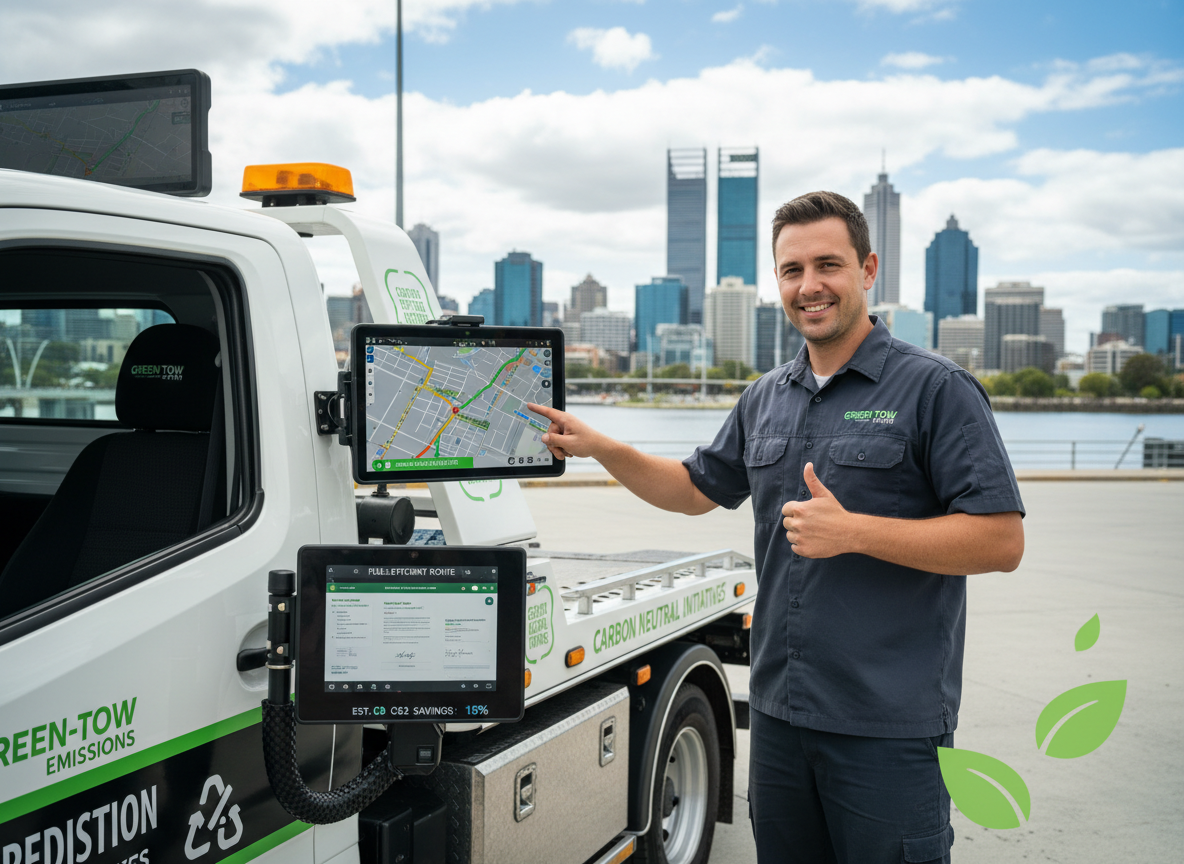
Route Optimisation and GPS Technology
Think of route optimisation like this: if you’re driving to three different suburbs to pick up groceries, you wouldn’t zigzag randomly across the city. You’d plan the most efficient loop. Towing’s no different, except the stakes are higher – every unnecessary kilometre burns diesel and keeps another customer waiting.
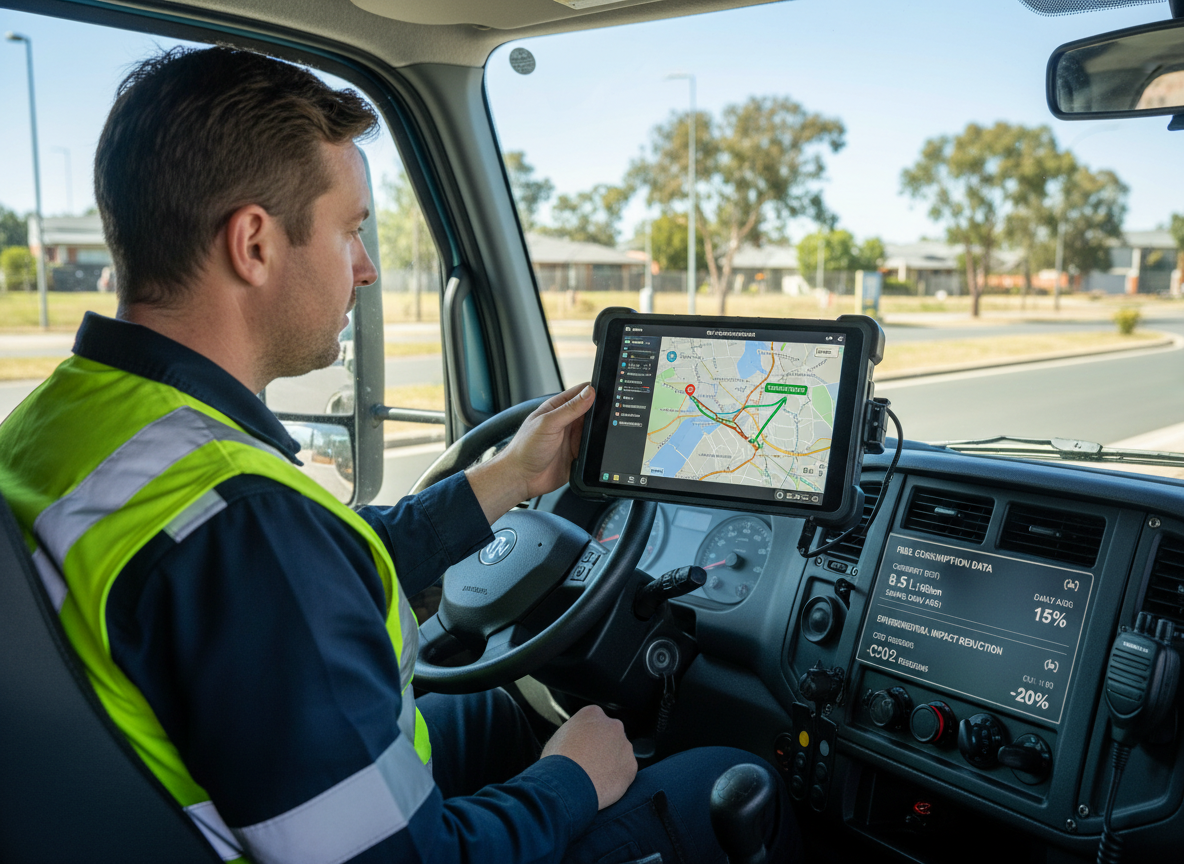
Advanced GPS and dispatch software now allows operators to assign the nearest available truck to each callout (cutting response times and travel distance), plan multi-job routes when transporting vehicles to similar destinations, avoid congestion hotspots that burn fuel whilst idling in traffic, and monitor real-time driver behaviour to identify excessive idling or inefficient driving patterns.
The emissions impact is substantial. A Perth operator running 10 trucks might collectively drive 500,000+ kilometres annually. Reducing that by just 10% through better routing saves 50,000 km – equivalent to roughly 15,000-20,000 litres of diesel, depending on vehicle size and load.
That’s 40-50 tonnes of CO2 eliminated, purely through smarter logistics with sustainable towing practices WA.
Hybrid and Alternative Fuel Vehicles
Here’s where the conversation gets interesting – and complicated. Hybrid tow trucks exist, primarily in markets like California and parts of Europe where regulatory pressure and subsidies have driven adoption. But they’re not yet common in Australia, and for good reason.
Towing demands high torque and sustained power. A typical tilt tray truck might weigh 12 tonnes empty and carry another 5-8 tonnes of vehicle or machinery. Accelerating that mass from a standstill, or hauling it up Perth’s hills, requires serious diesel grunt. Current hybrid systems struggle to deliver equivalent performance, particularly for heavy-duty applications.
That said, we’re watching three developments closely:
Biodiesel blends: B20 (20% biodiesel, 80% conventional diesel) is already compatible with most modern engines and cuts lifecycle emissions by 15-20%. Availability in Perth is improving, though supply chain consistency remains a challenge.
Compressed Natural Gas (CNG): Some operators are trialling CNG for light-duty towing (standard cars, not heavy machinery). CNG produces roughly 25% less CO2 than diesel, but requires dedicated refuelling infrastructure.
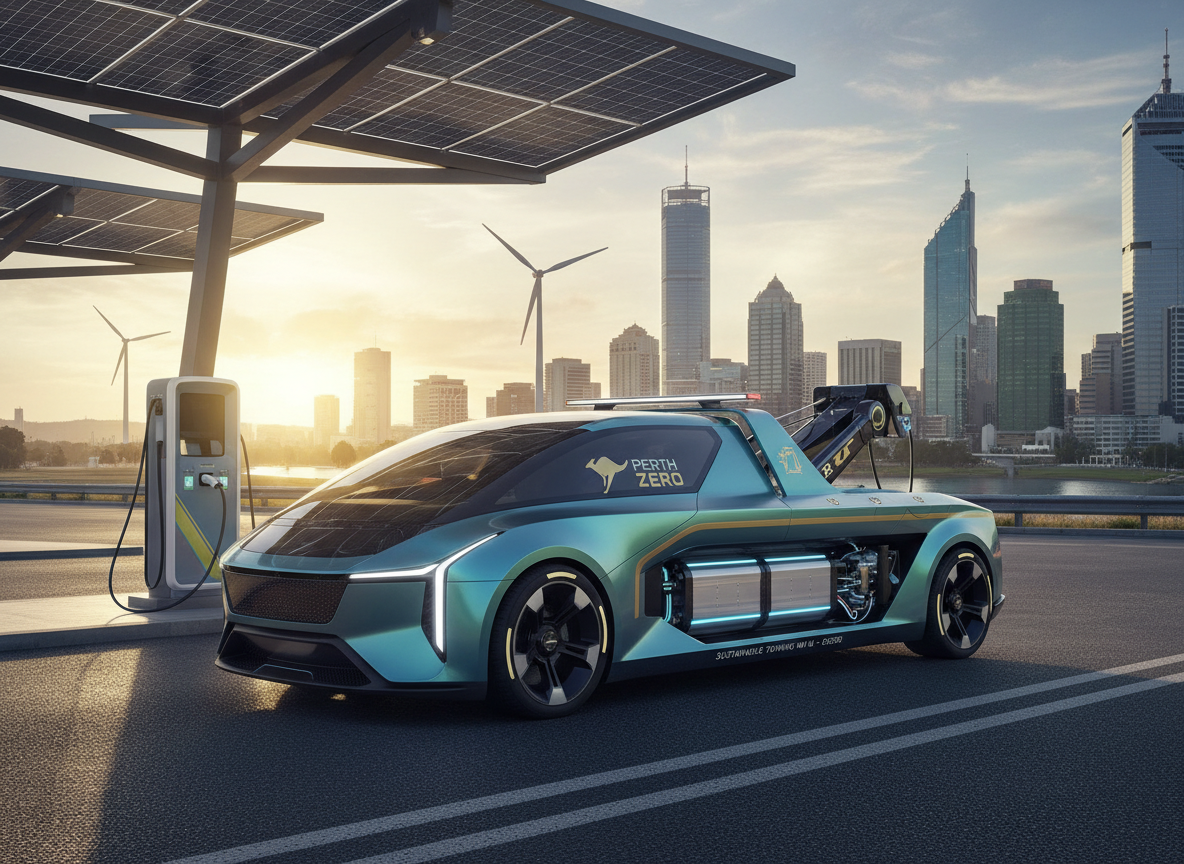
Electric tow trucks: Still largely experimental for anything beyond light urban work. Battery weight and range limitations make them impractical for Perth’s distances and heavy loads – for now. But battery technology is advancing fast.
The realistic pathway for most Perth operators over the next 5-10 years involves transitioning to the cleanest possible diesel engines whilst monitoring alternative fuel viability. It’s not sexy, but it’s pragmatic.
Operational Changes That Reduce Environmental Impact
Technology and new trucks get the headlines, but day-to-day operational decisions often deliver faster emissions reductions. These are the changes operators can implement immediately, without waiting for fleet replacement cycles.
Preventative Maintenance and Tyre Management
A poorly maintained truck burns more fuel. It’s that simple.
Dirty air filters restrict airflow, forcing the engine to work harder. Under-inflated tyres increase rolling resistance – think of it like trying to ride a bicycle with soft tyres versus properly pumped ones. The difference in effort (and fuel consumption) is measurable.
Our maintenance schedule prioritises engine tune-ups every 20,000 km to maintain optimal combustion efficiency, tyre pressure checks before every shift (under-inflation by just 10% can increase fuel consumption by 2-3%), regular DPF (Diesel Particulate Filter) servicing to prevent regeneration cycles that spike fuel use, and aerodynamic checks to ensure fairings, mirrors, and bodywork aren’t creating unnecessary drag.
These aren’t radical innovations. They’re basic fleet management done rigorously, which many operators let slide when they’re focused purely on keeping trucks on the road.
Reducing Idling Time
Tow truck operators often idle their engines during hookups, paperwork, or whilst waiting for police clearance at accident scenes. A heavy diesel engine can burn 2-4 litres per hour whilst idling – pure waste that produces zero productive work.
Driver training now emphasises shutting down during extended waits (anything over 2-3 minutes), using auxiliary power units for hydraulic functions rather than running the main engine, and pre-planning paperwork to minimise time spent stationary with the engine running.
The cultural shift matters as much as the policy. Older drivers grew up in an era when idling was standard practice. Changing that requires consistent messaging and, frankly, monitoring through telematics systems that flag excessive idling.
Load Optimisation and Vehicle Selection
Not every job requires our largest truck. Using a 15-tonne tilt tray to move a small sedan wastes fuel and ties up capacity that might be needed for genuine heavy work.
Matching the right vehicle to each job involves maintaining a diverse fleet (light, medium, and heavy-duty trucks), accurate customer questioning during booking to understand vehicle weight and dimensions, and dynamic dispatch that considers both proximity and vehicle suitability.
When we send our tilt tray to collect a prestige vehicle, we’re using the right tool for the job – one that protects the car whilst avoiding the fuel penalty of an oversized truck.
How Customers Can Support Green Towing Practices
Operators can’t do this alone. Customer choices influence the industry’s environmental footprint more than most people realise.
Choosing Operators Who Prioritise Efficiency
When you need a tow, price often dominates the decision. But asking a few extra questions reveals a lot about an operator’s environmental approach:
- What’s the average age of your fleet?
- Do you use route optimisation software?
- Are your trucks Euro 5 or Euro 6 compliant?
Operators who’ve invested in cleaner technology and smarter logistics will answer these questions confidently. Those who haven’t will typically deflect or not understand the question at all.
Supporting operators who prioritise efficiency sends a market signal that customers value environmental responsibility. That matters, because fleet upgrades are expensive and operators need confidence the investment will be recognised.
Accurate Information Reduces Unnecessary Trips
Here’s a scenario we see constantly: a customer calls for car towing services, describes their vehicle as a “small car,” and we arrive to find a heavily modified 4WD that requires completely different equipment.
That means a second truck, a second trip, and double the emissions for a job that should’ve been handled correctly the first time.
Providing accurate information when booking – vehicle make and model, any modifications, exact location, whether keys are available – allows operators to send the right truck the first time. It’s faster for you, cheaper for everyone, and eliminates wasteful duplicate trips.
Consolidating Transport When Possible
If you’re moving multiple vehicles or pieces of equipment, consolidating them into a single transport run (or coordinating timing so they can be handled sequentially by the same truck) cuts total distance travelled.
This applies particularly to businesses. A construction company moving three pieces of machinery from one site to another doesn’t need three separate callouts spread across three days. Our heavy machinery towing team can often handle multiple items in a planned sequence that minimises total truck movements.
It requires a bit more coordination on your end, but the efficiency gains – and emissions reductions – are substantial.
The Business Case for Green Towing
Environmental benefits are real, but operators won’t sustain these practices unless they make financial sense. The good news: they increasingly do.
Fuel savings are the most direct return. A medium-sized Perth operator running 5-8 trucks might spend $300,000-$500,000 annually on diesel. Reducing consumption by 15% through the strategies outlined above saves $45,000-$75,000 per year. That funds a lot of fleet upgrades.
Maintenance costs drop with cleaner engines and better operational practices. Modern Euro 6 engines experience less carbon buildup and require less frequent DPF replacements (which can cost $3,000-$5,000 each time).
Insurance and compliance benefits are emerging too. Some insurers now offer premium discounts for operators who demonstrate environmental management systems. And whilst Perth doesn’t yet have low-emission zones, being prepared for them avoids the risk of suddenly needing to retrofit or replace non-compliant vehicles.
Customer preference is shifting, particularly among corporate clients. Fleet managers at large companies increasingly include environmental criteria in their transport supplier evaluations. Being able to demonstrate measurable emissions reductions opens doors to contracts that pure price competition won’t win.
What’s Next for Green Towing in Perth
The trajectory is clear, even if the timeline isn’t. Perth’s towing industry will continue moving towards lower emissions, driven by a combination of regulation, economics, and customer expectations.
Electric heavy vehicles will eventually become viable for towing applications. Battery energy density improves roughly 5-8% annually, and charging infrastructure is expanding. Within 10-15 years, we expect electric options for at least light and medium-duty towing work.
Carbon offset programs are already being explored by some operators, who purchase verified offsets to neutralise emissions from diesel consumption. This is controversial – some see it as genuine climate action, others as greenwashing. Our view: offsets are a supplement to direct emissions reductions, not a substitute.
Industry standards and certification will likely emerge, similar to what’s happened in other transport sectors. A “Certified Green Towing Operator” designation could help customers identify genuinely committed operators versus those making superficial claims.
For All Out Towing, the commitment is straightforward: we’ll continue investing in the cleanest available technology that meets the performance demands of 24-hour emergency towing and heavy transport work. We’ll optimise operations to eliminate waste. And we’ll be transparent about both our progress and the challenges that remain.
Making Green Towing Work Without Compromising Service
Here’s the non-negotiable reality: environmental improvements can’t come at the expense of the core service promise. When your car breaks down on Tonkin Highway at midnight, or you’re involved in an accident requiring immediate recovery, you need a truck there fast. Not eventually. Not when it’s convenient for route optimisation. Fast.
That tension – between operational efficiency and response urgency – is where green towing Perth practices either succeed or fail in the real world.
The solution lies in intelligent systems that balance both priorities. Route optimisation doesn’t mean delaying emergency responses to bundle jobs. It means positioning trucks strategically across the metro area during quieter periods, so the nearest available unit is genuinely near when urgent calls come in.
Fuel-efficient driving doesn’t mean crawling along at 60 km/h on the freeway. It means smooth acceleration, maintaining momentum, and avoiding the aggressive stop-start driving that wastes fuel without improving response times.
The operators who’ll lead Perth’s green towing transition are those who recognise these practices aren’t in conflict – they’re complementary. A well-maintained, efficiently routed fleet responds faster and burns less fuel. Modern engines deliver better performance and lower emissions with sustainable towing practices WA implementation.
We’ve seen how WA’s approach affects every type of vehicle, from daily drivers to prestige car towing recoveries where environmental considerations complement luxury service standards. The patterns are consistent across all vehicle types – green practices enhance rather than compromise service quality.
Conclusion
Green towing practices in Perth have moved beyond theoretical discussions into practical implementation. Operators are investing in cleaner engines, smarter logistics, and operational changes that measurably reduce carbon footprints – not because regulation demands it yet, but because the business case increasingly supports it.
The transition won’t happen overnight. Heavy-duty towing demands power and reliability that current alternative fuel technologies struggle to match. But the combination of Euro 6 diesel engines, route optimisation, rigorous maintenance, and emerging technologies like biodiesel blends is delivering real emissions reductions today.
For customers, supporting this shift means choosing operators who’ve invested in modern, efficient fleets and providing accurate information that eliminates wasteful duplicate trips. For operators, it means recognising that environmental responsibility and operational excellence aren’t competing priorities – they’re increasingly the same thing.
The towing industry will never be zero-emission in the near term. But it can be dramatically cleaner than it was, and Perth operators are proving that’s achievable without compromising the 24/7 reliability our community depends on.
If you need towing services from an operator committed to both environmental responsibility and uncompromising service standards, contact us to discuss your requirements. Our team is available around the clock for everything from emergency breakdowns to planned heavy machinery transport and prestige car movements.