The towing industry across Australia is shifting. Not in a decade. Now.
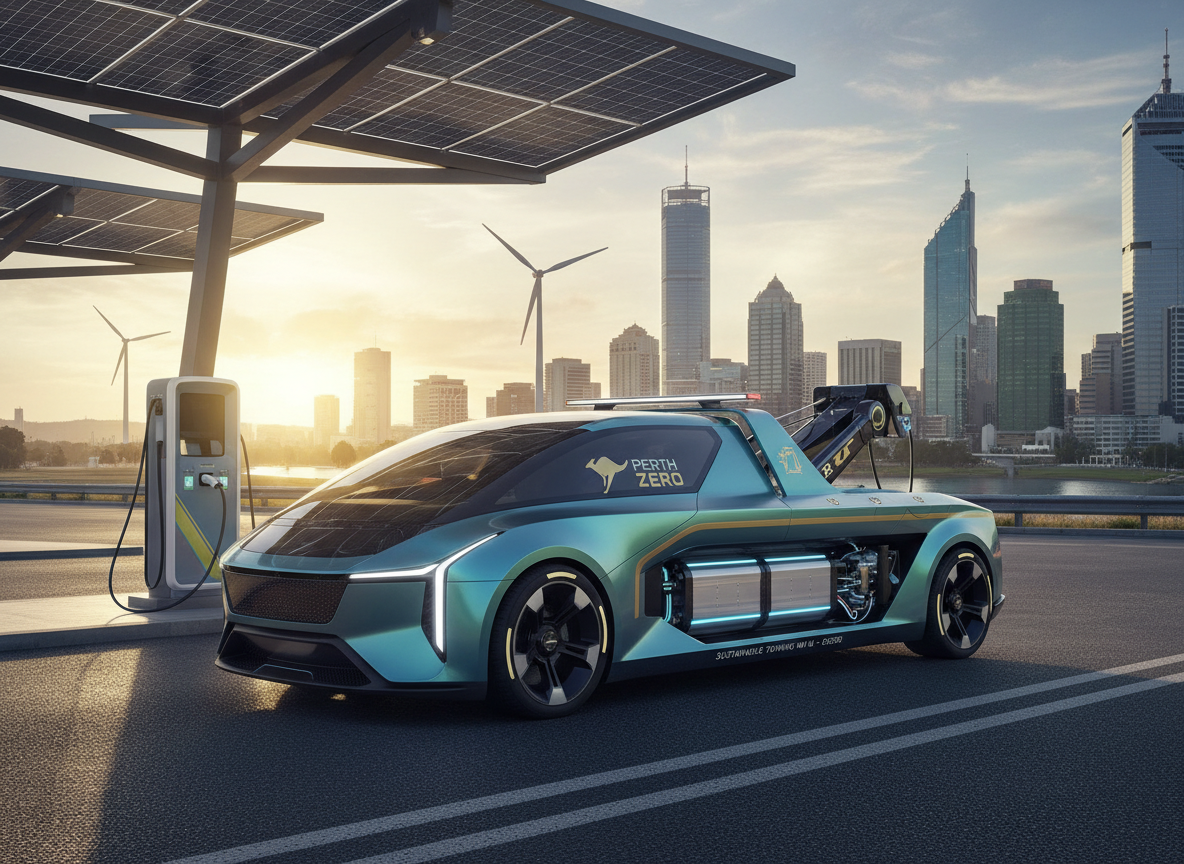
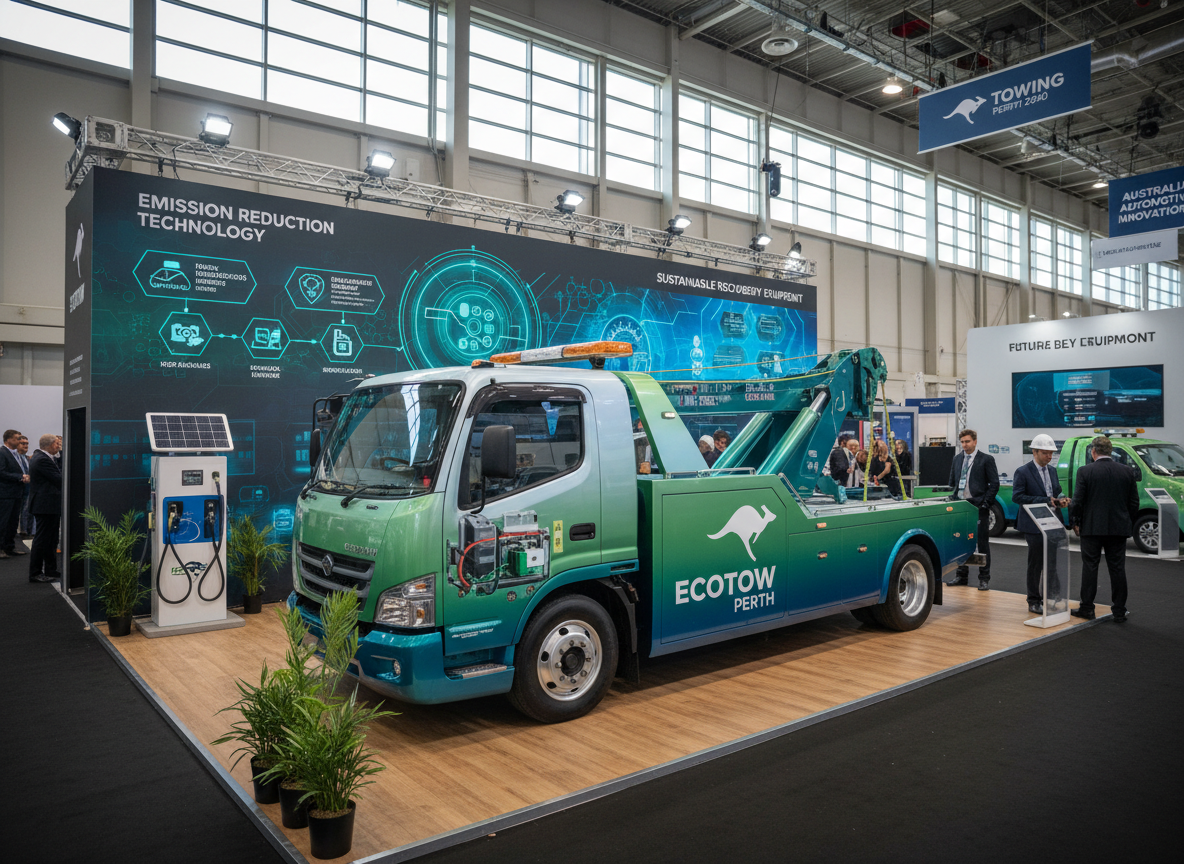
We’re watching electric tow trucks roll into Perth depots, hybrid systems replace diesel engines, and solar panels appear on recovery vehicle roofs. These aren’t concept vehicles at trade shows – they’re working trucks responding to breakdowns, transporting machinery, and moving prestige cars across the metro area.
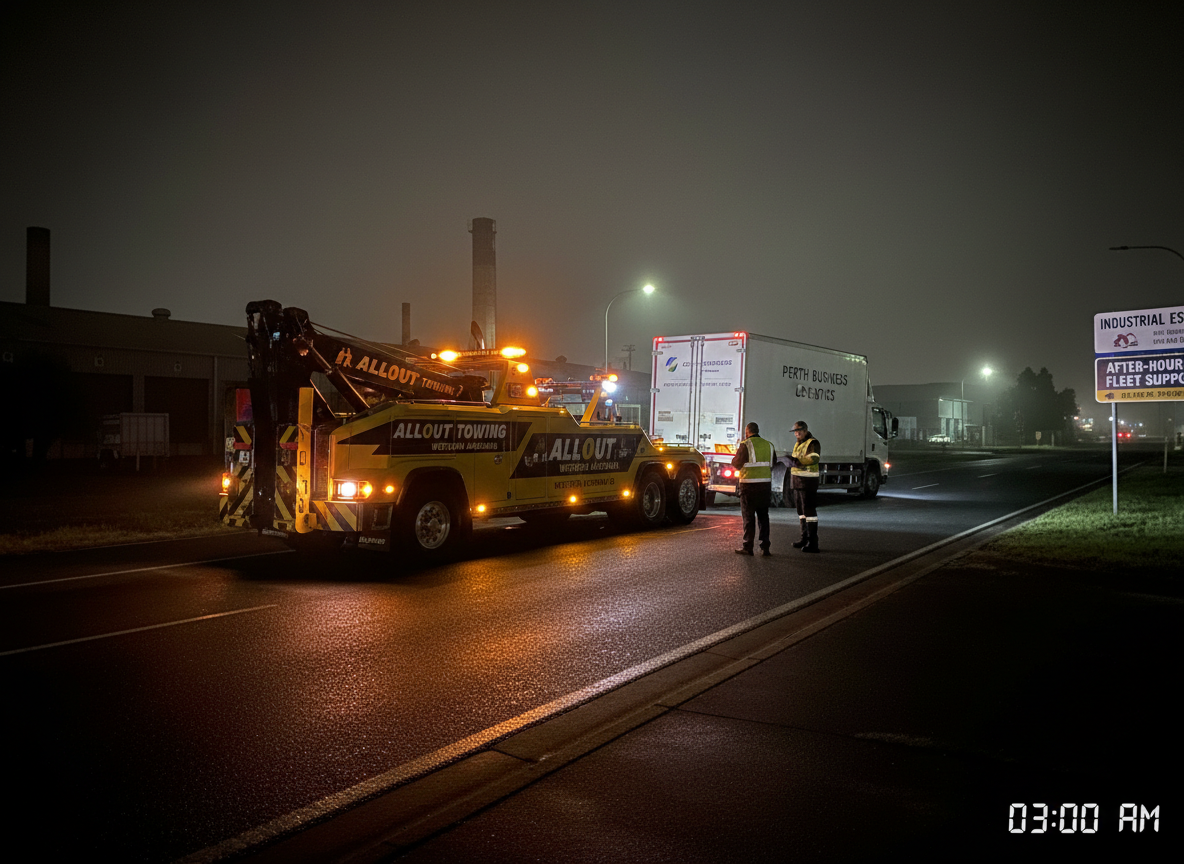
The change stems from three forces: tightening emissions standards, rising fuel costs, and genuine demand from customers who want their breakdown or transport job handled with less environmental impact. For All Out Towing, that means evaluating every innovation through a practical lens – does it work on Perth roads, can it handle a 3am callout, and will it safely move your vehicle?
Let’s examine what’s actually arriving with eco-friendly towing Perth innovations, what works, and what’s still being tested.
Why Australian Towing Companies Are Going Green
The push toward eco-friendly towing isn’t driven by marketing. It’s economics and regulation.
Australia’s fuel prices hit operators hard. A heavy-duty diesel tow truck covering 200km daily burns through $150-200 in fuel. Multiply that across a fleet, across a year, and the numbers become unsustainable. Electric and hybrid alternatives slash that cost by 40-60%, depending on the system.
Then there’s the regulatory pressure. The National Heavy Vehicle Regulator (NHVR) continues tightening emission standards for commercial vehicles, aligning with Euro 6 standards. By 2027, diesel trucks will need advanced particulate filters and NOx reduction systems – expensive retrofits for older fleets.
But here’s what surprises most people: customers are asking about it. Construction companies moving heavy machinery want to report lower Scope 3 emissions. Prestige car owners transporting classic vehicles to shows prefer operators who align with their values. It’s become a genuine selection criterion.
The question isn’t whether towing goes green. It’s how quickly the technology can match the demands of 24/7 emergency work.
Electric Tow Trucks: The Reality Check
Electric tow trucks sound perfect until you examine the operational reality of 24-hour emergency towing.
Benefits:
- Zero tailpipe emissions
- 60-70% lower running costs per kilometre
- Instant torque delivery (ideal for towing loads)
- Quieter operation in residential areas
- Reduced maintenance (fewer moving parts)
The Challenge: Range anxiety isn’t just a passenger car problem. A fully loaded electric tow truck pulling a 2.5-tonne vehicle drains batteries fast. Current models offer 150-250km range under load – adequate for metro Perth work, problematic for regional callouts to Mandurah, Gingin, or York.
Charging infrastructure presents the bigger hurdle. A standard Level 2 charger takes 6-8 hours to fully charge a commercial EV. Fast DC charging cuts that to 90 minutes, but Perth has limited commercial-grade DC charging stations suitable for trucks with trailers attached.
Think of it like this: a diesel truck refuels in 10 minutes and runs another 600km. An electric truck needs 90 minutes to charge and covers 200km. For a business promising rapid response, that’s not just inconvenient – it’s operationally limiting.
That said, we’re testing electric trucks for scheduled work: prestige car towing between known locations, container transport with predictable routes, and daytime metro car towing where charging between jobs is feasible.
The technology works. It just needs infrastructure to catch up with the demands of emergency response.
Hybrid Systems: The Practical Middle Ground
Hybrid tow trucks offer something electric can’t yet deliver: unlimited range with reduced emissions.
These systems combine a diesel or petrol engine with electric motors and battery packs. The electric system handles low-speed manoeuvring (winching, positioning, residential pickups), while the combustion engine takes over for highway driving and heavy loads.
Real-world performance: We’ve seen 30-40% fuel savings on hybrid tilt tray trucks running metro routes. The electric motor handles the stop-start nature of accident recovery – where you’re constantly positioning, loading, and moving between short distances – while the diesel engine provides the power for freeway transport.
The regenerative braking system captures energy normally lost as heat, feeding it back into the battery. On a typical day responding to breakdowns across Perth, that recovered energy powers auxiliary systems: hydraulic lifts, winches, and lighting.
Maintenance reality: Hybrid systems are more complex than pure diesel or pure electric. You’re maintaining two powertrains. But the combustion engine runs less, so it lasts longer. We’re seeing diesel engines in hybrid trucks reach 400,000km with minimal wear – nearly double the lifespan of constantly running diesel engines in traditional trucks.
For operators running mixed work – metro emergency calls, scheduled machinery transport, and regional recovery – hybrids make sense now. Not in five years. Today.
Solar-Assisted Tow Trucks: Beyond the Gimmick
Solar panels on tow trucks sound like greenwashing until you understand what they actually power.
We’re not talking about solar panels running the truck. That’s physically impossible – a tow truck needs 200-300 horsepower; solar panels generate enough to run a household fridge.
What they do power: auxiliary systems that normally drain the main battery.
- LED light bars and beacons (critical for roadside safety)
- Hydraulic pump systems for tilt trays
- Winch motors for light vehicle loading
- Cabin climate control when stationary
- Communication and GPS systems
Flexible solar panels mounted on truck roofs generate 300-600 watts in Perth’s sun. That’s enough to run auxiliary systems during daylight hours without idling the main engine.
The fuel savings are modest – perhaps 5-8% annually – but the operational benefit is significant. When you’re working an accident scene for 90 minutes with lights, winches, and radios running, solar-charged batteries mean you’re not burning diesel just to keep systems alive.
It’s a supporting technology, not a solution. But it’s one that works right now, requires minimal modification, and pays for itself within two years.
Biodiesel and Renewable Diesel: The Immediate Option
While electric infrastructure develops, renewable fuels offer instant emission reductions with zero equipment changes.
Biodiesel (B20): This blend contains 20% biodiesel (made from waste cooking oil, animal fats, or plant oils) mixed with 80% petroleum diesel. It works in any diesel engine without modification and reduces lifecycle carbon emissions by 15-20%.
Perth has limited but growing B20 availability through commercial fuel suppliers. We’ve run truck towing operations on B20 for 18 months with zero performance issues. Fuel economy matches regular diesel. Power delivery is identical. The only difference is what comes out the exhaust.
Renewable Diesel (R99): This is the next level – chemically identical to petroleum diesel but made from renewable sources through hydroprocessing. It’s a drop-in replacement requiring zero engine modifications, and it cuts lifecycle emissions by 60-80%.
The challenge? Supply and cost. R99 is 15-25% more expensive than standard diesel and availability in Perth remains limited to specific commercial suppliers.
But here’s what matters: a towing company can reduce its carbon footprint by 20% tomorrow simply by switching fuel suppliers. No new trucks. No charging infrastructure. No operational changes with environmentally responsible towing practices.
Lightweight Materials: Towing More While Burning Less
The greenest truck is one that uses less fuel to do the same job. That’s where material science enters the picture.
Modern tow truck bodies increasingly use aluminium alloy, high-strength steel, and composite materials instead of traditional mild steel. The result? A tilt tray body that weighs 400-600kg less than conventional designs.
Why weight matters: Every 100kg removed from a truck’s body allows it to carry an additional 100kg of payload – or burn less fuel moving the same load. For specialised towing operations moving heavy equipment, that weight saving translates directly to efficiency.
We’ve tested aluminium tilt trays on heavy machinery towing jobs. The lighter body improves fuel economy by 8-12% compared to steel equivalents, while maintaining the same load capacity and structural strength.
The bonus? Lighter trucks cause less road wear, reduce tyre degradation, and put less stress on braking systems. Lower weight means lower maintenance costs across the board.
Smart Route Optimisation: The Hidden Green Technology
The most eco-friendly tow truck Perth operators use is one that drives fewer unnecessary kilometres.
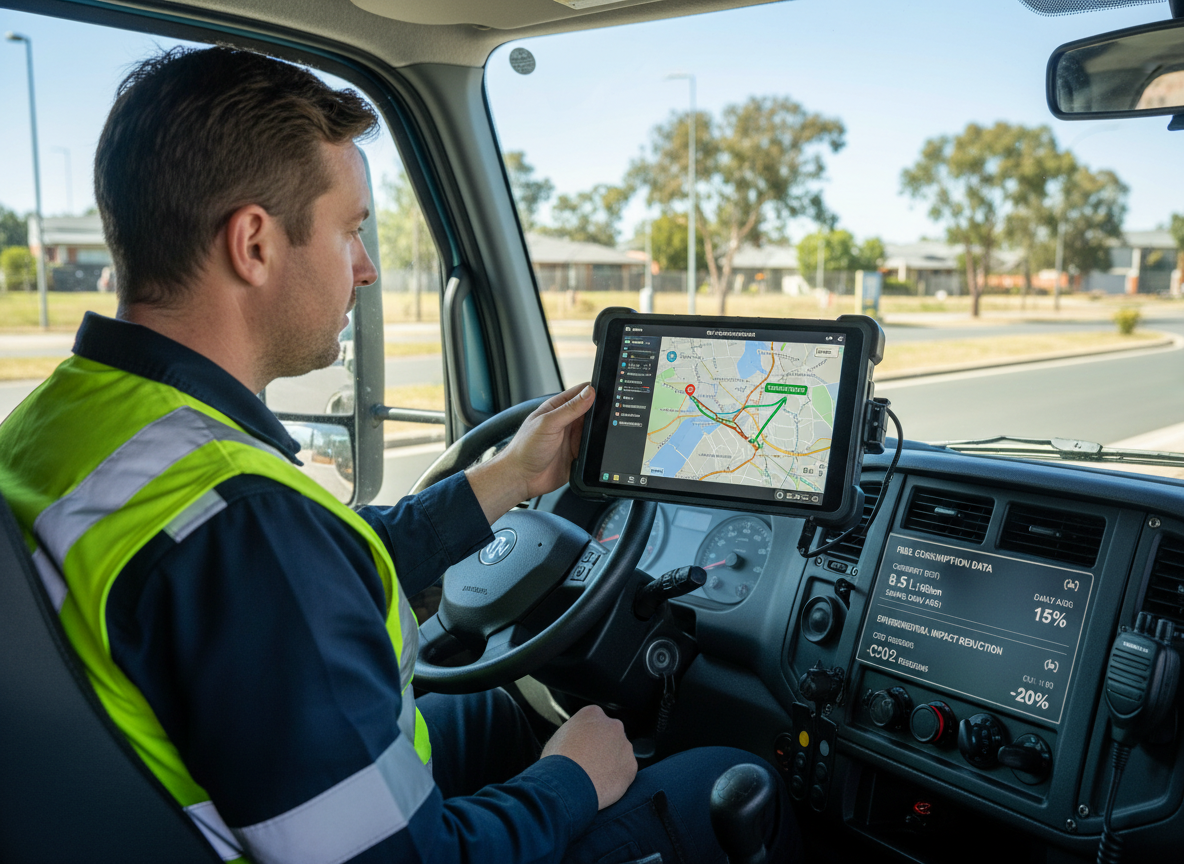
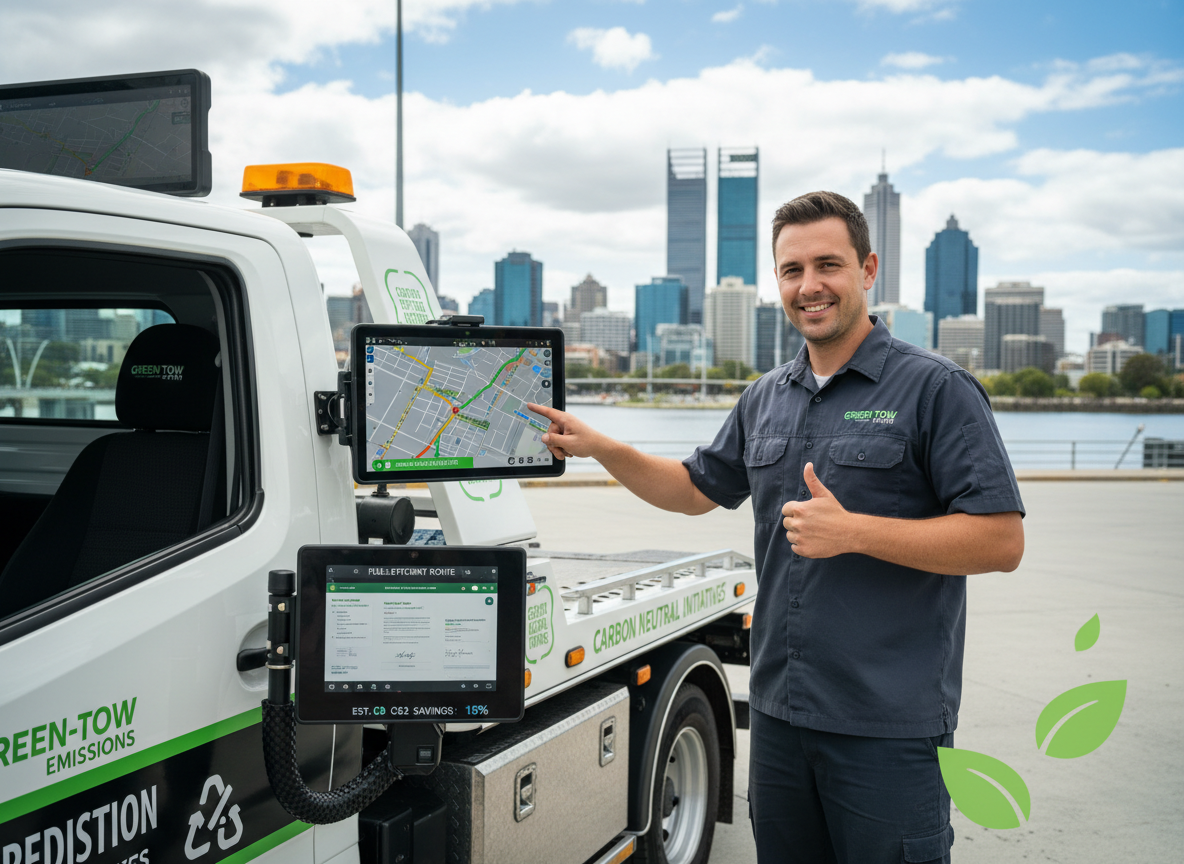
GPS route optimisation software has transformed how we dispatch vehicles. When a call comes in for a breakdown in Joondalup, the system identifies the nearest available truck, calculates the most efficient route accounting for real-time traffic, and dispatches accordingly.
Real impact: Across a month of metro operations, smart routing reduces total fleet kilometres by 12-15%. That’s thousands of litres of saved fuel and tonnes of avoided emissions – achieved purely through software.
The system also clusters jobs geographically. If we’re transporting a prestige vehicle from Fremantle to Ellenbrook, the software identifies potential pickup jobs along the return route, minimising empty running.
It’s not glamorous technology. But when you’re running a fleet 24/7, efficiency at this level matters more than any single truck innovation.
What’s Coming: Technologies in Development
Several innovations are being tested but aren’t quite ready for full-scale Australian deployment.
Hydrogen fuel cell trucks: These generate electricity onboard by combining hydrogen with oxygen, producing only water vapour as emission. Range matches diesel (500km+), refuelling takes 15 minutes, and payload capacity is unaffected.
The problem? Australia has virtually no hydrogen refuelling infrastructure. The nearest hydrogen station to Perth suitable for commercial vehicles is… well, there isn’t one. Until that changes, hydrogen remains a “watch this space” technology.
Wireless charging: Imagine parking your electric tow truck over a charging pad at the depot and having it automatically charge without plugging in. The technology exists and is being trialled in Europe for commercial fleets.
Australian trials are expected to begin in 2025, focusing on fixed-route commercial vehicles. For towing – where routes vary constantly – wireless charging at depot locations could solve the “forgetting to plug in” problem that plagues electric fleet management.
Battery swap systems: Instead of waiting 90 minutes to charge, drive into a station and have your depleted battery swapped for a full one in 5 minutes. It’s being tested for commercial trucks in China and parts of Europe.
The challenge is standardisation. Every truck manufacturer uses different battery configurations, making universal swap stations nearly impossible. Unless the industry agrees on battery standards – unlikely – this remains a niche solution.
The Cost Reality: Is Green Towing Affordable?
Here’s the uncomfortable truth: green towing technology costs more upfront.
An electric tow truck costs $180,000-250,000 compared to $120,000-150,000 for an equivalent diesel truck. A hybrid system adds $40,000-60,000 to the base vehicle price. Solar panels, lightweight materials, and smart routing software all require capital investment.
For small operators running 2-3 trucks, that price difference is prohibitive. For larger fleets like ours, the calculation changes when you factor in:
- 40-60% lower fuel costs (electric)
- 30-40% lower fuel costs (hybrid)
- 15-20% lower maintenance costs (fewer moving parts)
- Reduced downtime (electric motors are more reliable than diesel engines)
Government incentives: The Australian Government’s Clean Energy Finance Corporation (CEFC) offers low-interest loans for commercial EV purchases. Some state governments provide registration discounts for zero-emission commercial vehicles.
Payback period: For a truck covering 60,000km annually, an electric or hybrid system typically pays for itself in 4-6 years through fuel and maintenance savings. Given most tow trucks operate for 10-15 years, the lifetime cost is actually lower than diesel equivalents.
But you need the capital to make that initial investment. That’s the barrier preventing faster industry adoption.
What This Means for Your Towing Needs
Whether you need tilt tray services for your AWD vehicle or you’re moving a 10-tonne excavator, the truck that arrives is changing.
You won’t necessarily notice the difference. The service remains the same: fast response, safe loading, professional transport. But the environmental impact of that service is dropping.
For businesses tracking carbon emissions, ask your towing provider about their fleet composition. Companies moving toward hybrid or electric trucks can provide emissions data for your Scope 3 reporting.
For individuals, the benefit is simpler: you’re getting the same reliable service with less environmental impact. No compromise. Just progress with environmentally responsible towing implementation.
The Perth Advantage: Why We’re Positioned for Green Towing
Perth’s geography and climate create ideal conditions for eco-friendly towing Perth adoption.
Compact metro area: Most emergency towing occurs within a 40km radius of the CBD. That’s well within electric truck range, even under load. Unlike Sydney or Melbourne, where sprawl extends 80km+ from the centre, Perth’s concentrated population makes EVs viable for metro work.
Solar resource: Perth receives more sunshine than any other Australian capital – averaging 8.8 hours daily. Solar-assisted systems generate maximum power here. What works marginally in Melbourne works brilliantly in Perth.
Supportive infrastructure: Western Australia is investing heavily in EV charging infrastructure. The state government’s EV strategy aims for charging stations every 150km on major routes by 2025. For towing operators, that infrastructure enables electric trucks to handle regional work, not just metro calls.
Industry leadership: Perth’s towing industry has always adopted technology early – from GPS tracking to digital dispatch systems. That culture of innovation positions local operators to lead Australia’s transition to green towing.
We’re not waiting for perfect solutions. We’re implementing what works now while testing what’s coming next.
The Real Question: Does Green Towing Compromise Service?
No. That’s the short answer.
The longer answer: we won’t adopt any technology that compromises response time, safety, or capability. If an electric truck can’t reliably handle a 2am callout to Mundaring, we don’t use it for that work. If a hybrid system can’t safely winch a bogged excavator, it doesn’t get deployed for heavy machinery jobs.
Green technology must meet the same operational standards as conventional equipment. When it does – and increasingly, it does – we adopt it.
Your breakdown doesn’t care about the environment. You need help, fast, done safely. The environmental benefit comes as a result of smart technology that maintains service standards while reducing emissions.
That’s the only way eco-friendly towing becomes standard practice – when it works as well or better than what it replaces.
Moving Forward: What to Expect
The next five years will transform Australian towing more than the previous twenty.
Electric trucks will become standard for metro work as charging infrastructure expands. Hybrid systems will dominate regional and heavy-duty applications. Renewable diesel will replace petroleum diesel for conventional trucks. Solar-assisted systems will become as common as LED light bars.
This isn’t speculation. The economics and regulations are driving it. The technology is ready. The transition is happening.
When you contact us for towing or transport services, you might not know whether the truck that arrives is diesel, hybrid, or electric. You’ll just know it arrived quickly, handled your vehicle safely, and got the job done professionally.
That’s exactly how it should be. Green technology succeeding not because it’s green, but because it’s better.