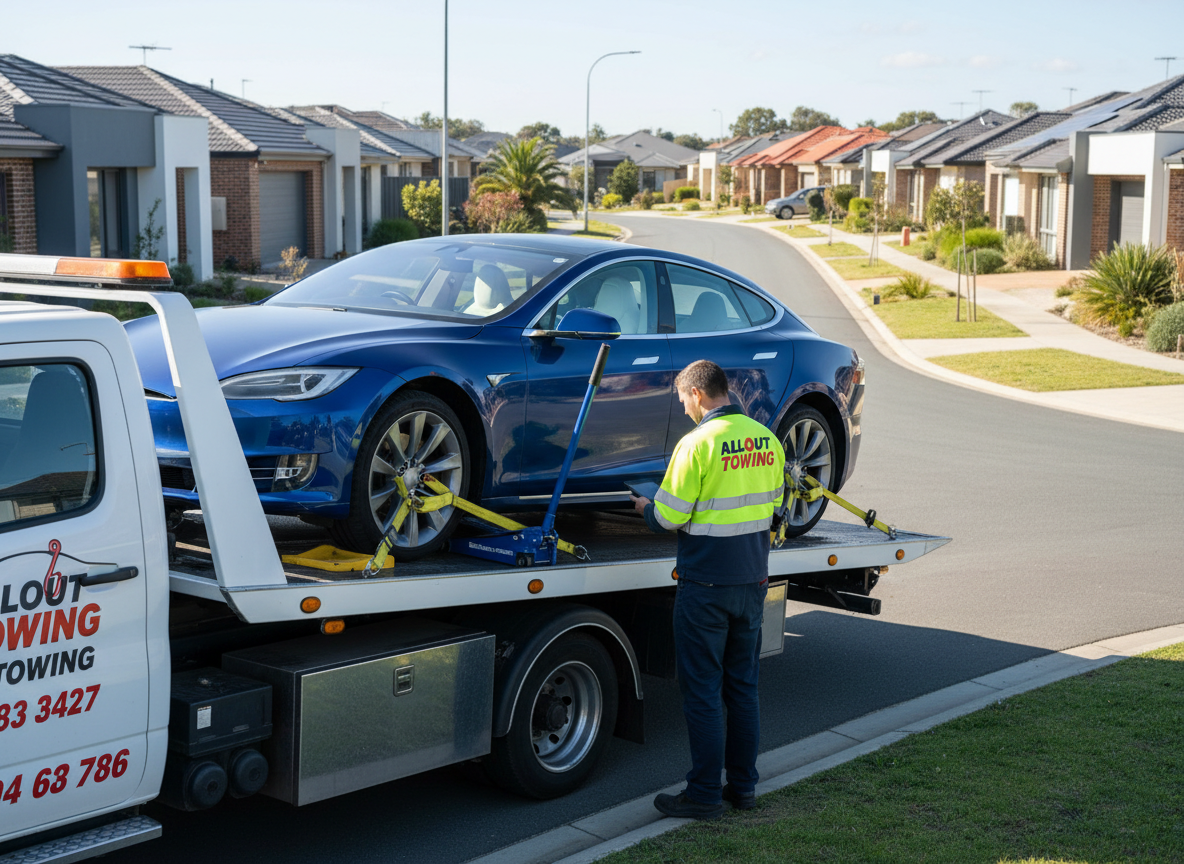
You’re stuck on the side of Kwinana Freeway at 11 PM with a blown tyre and a dead battery. The last thing you want to deal with? Fumbling for cash or waiting around while the tow operator processes a credit card through an old EFTPOS machine. Contactless towing payment Perth services are changing how breakdowns are handled-not just making transactions faster, but genuinely reducing the stress of an already difficult situation.
We’ve been in this industry for over 15 years, and we’ve watched payment technology shift from cash-only operations to fully digital systems. The difference isn’t just about convenience. It’s about getting you off the road faster, reducing wait times at drop-off, and giving you one less thing to worry about when your day’s already gone sideways.
Why Payment Speed Actually Matters in Towing
Here’s something most people don’t think about until they’re in the moment: every minute you spend on the roadside is a minute you’re exposed to traffic risk. In 2023, Main Roads WA reported over 18,000 roadside incidents across Perth’s metro area-and a significant portion of those involved secondary collisions or near-misses while drivers waited for assistance.
Fast payment processing means our crew can get you loaded and moving quicker. No digging through wallets. No waiting for bank approvals on dodgy mobile reception. Just tap, confirm, and we’re moving your vehicle to safety.
The second benefit? Transparency. Digital payment systems generate instant receipts with full breakdowns of charges. You see exactly what you’re paying for-the tow distance, any after-hours fees, the service type-all itemised before you approve the transaction. No surprises, no disputes later.
How Contactless Payment Works in Real Towing Situations
Let’s break down what actually happens when you book our 24-hour emergency towing with contactless payment enabled.
Step One: You Call or Book Online
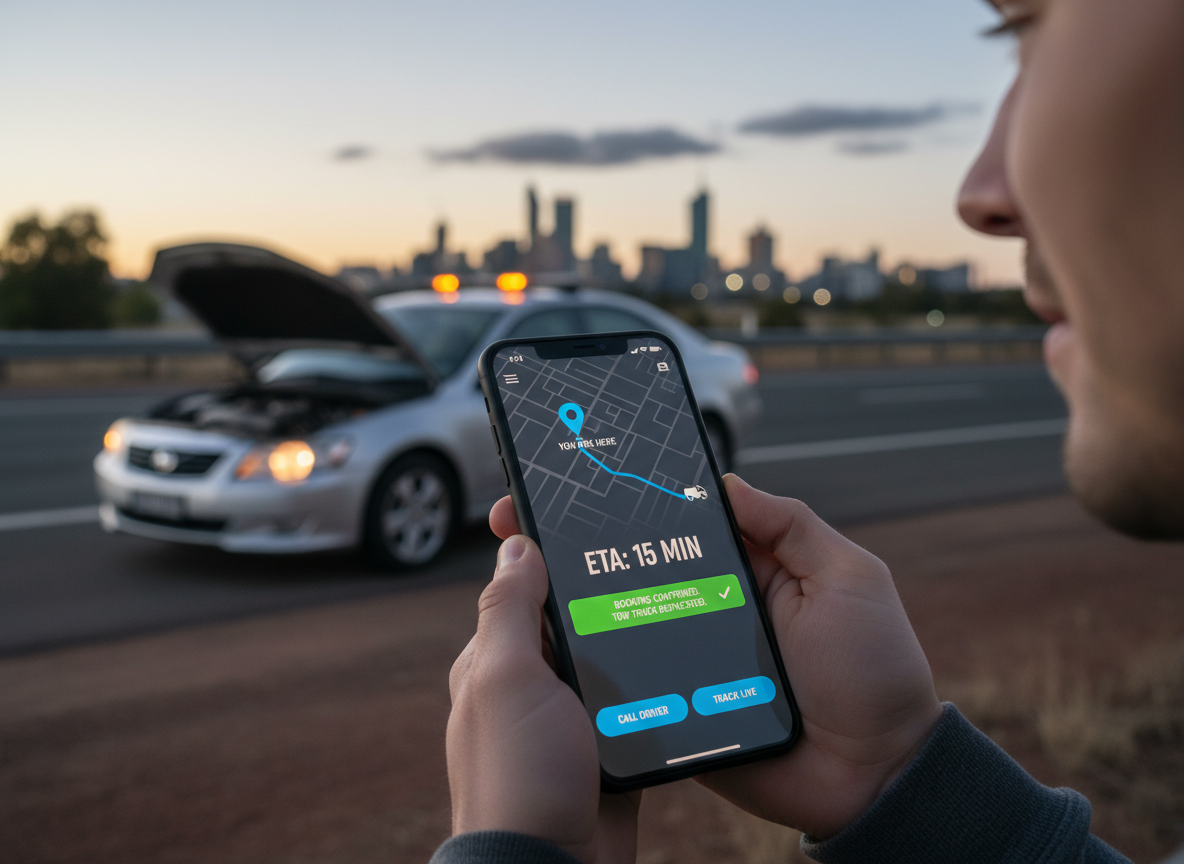
When you contact us for a tow, we provide an upfront quote based on your location, vehicle type, and destination. If you’re booking through our online system, you can pre-authorise payment using a saved card or digital wallet.
Step Two: On-Site Confirmation
Our operator arrives, assesses the vehicle (sometimes the situation changes-maybe your car’s in a trickier spot than expected, or we need to use tilt tray services instead of a standard tow). If the quote adjusts, you’ll get a revised estimate on the spot via SMS or our mobile system.
Step Three: Tap and Go
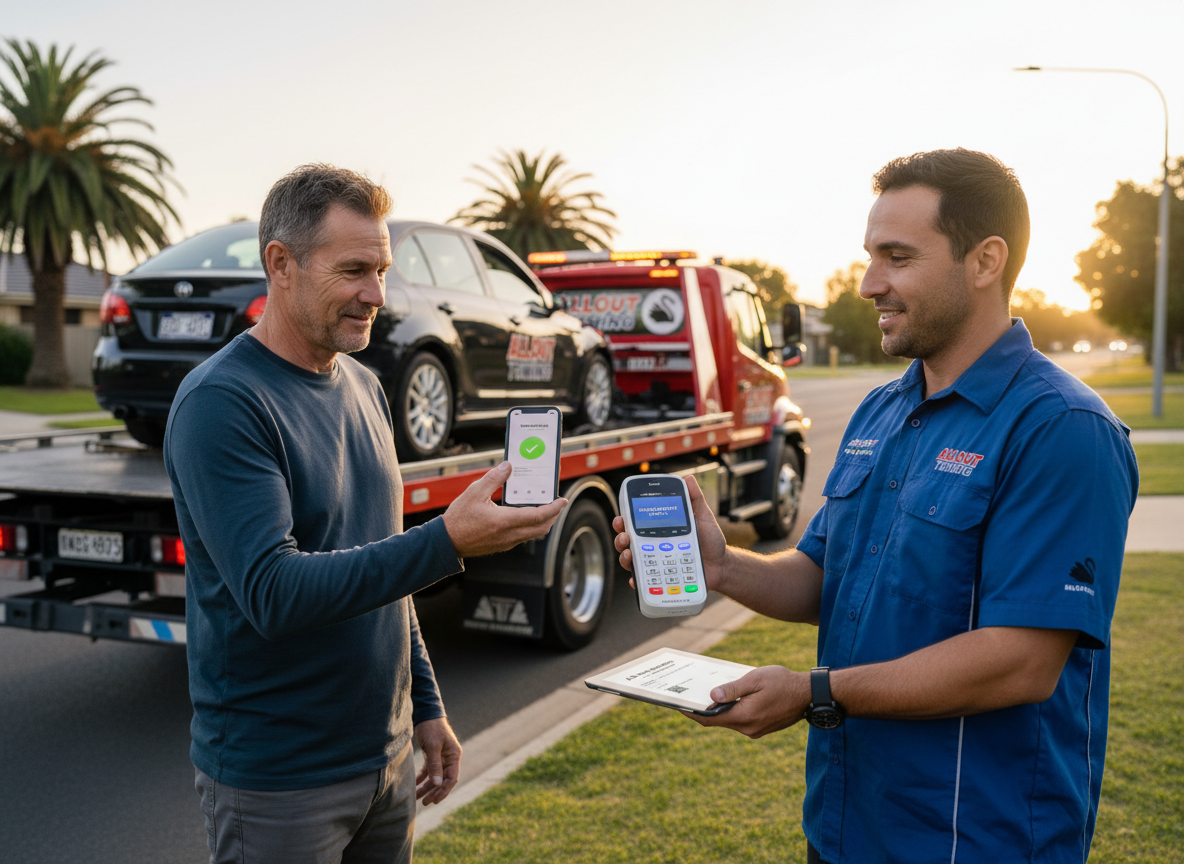
Once your vehicle is secured and ready to move, you approve the final charge with a tap of your phone or card. Apple Pay, Google Pay, Samsung Pay, or standard contactless cards-all work seamlessly. The receipt hits your email before we’ve even left the scene.
Step Four: You’re Done
No paperwork to sign. No carbon-copy invoices to keep track of. Just a digital record tied to your booking reference, which you can access anytime for insurance claims or records.
The Technology Behind Faster Towing Transactions
Think of contactless payment like this: it’s the difference between sending a text message and waiting for a fax machine. Both get information from Point A to Point B, but one does it in seconds while the other takes minutes (and usually jams halfway through).
Mobile EFTPOS terminals used to rely on 3G or patchy 4G connections, especially in Perth’s outer suburbs or along stretches of Great Eastern Highway where reception drops. Modern contactless systems use dual-band connectivity-mobile data and satellite backup-so transactions process even in low-coverage areas.
Tokenisation is the real security win here. When you tap your phone or card, the system doesn’t transmit your actual card number. Instead, it sends a one-time encrypted token that’s useless if intercepted. That’s why contactless is actually safer than handing your physical card to someone to swipe.
Instant bank verification means we’re not waiting 30-60 seconds for approval. Contactless transactions authenticate in under two seconds on average, compared to 8-12 seconds for chip-and-PIN. Multiply that across a busy Saturday night when we’re running six trucks, and you’re looking at hours saved across our fleet.
What This Means for Different Towing Scenarios
Not all tows are created equal, and contactless payment adapts to each situation differently.
Roadside Breakdowns
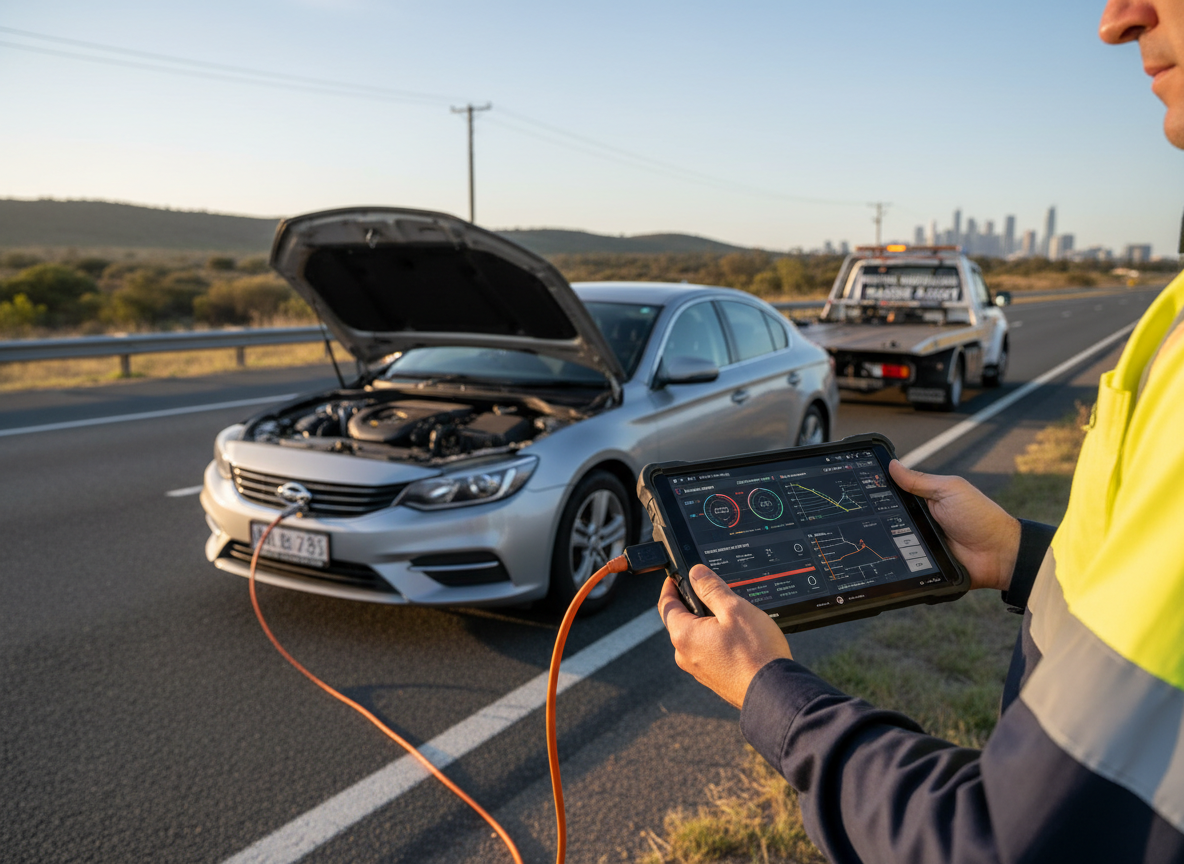
You’re on Tonkin Highway with a blown radiator hose. It’s 35 degrees, and you’ve got two kids in the back seat. Our operator arrives, loads your vehicle onto the tilt tray, and you’re back in your air-conditioned car within 15 minutes. Payment happens via your phone while you’re already heading to the mechanic. No standing in the heat, no awkward conversations about whether we take Amex.
Accident Towing
Accident towing is time-sensitive for multiple reasons-clearing the road, coordinating with police, getting your vehicle to an assessor. Contactless payment means we can invoice your insurance company directly if you’ve pre-arranged it, or you can approve the charge and submit the receipt to your insurer later. Either way, you’re not holding up the process while we process paperwork.
Heavy Machinery Transport
When we’re moving a 10-tonne excavator for a construction crew using heavy machinery towing, payment usually happens at the job site. Contactless systems let site managers approve charges on company cards without needing to coordinate with head office for bank transfers. The invoice goes straight to their accounts team, and we’re off to the next job.
Prestige Vehicle Moves
Owners booking prestige car towing for classic or high-value vehicles often want detailed records for insurance and logbooks. Contactless payment systems generate itemised receipts showing exactly when the vehicle was collected, the route taken (via GPS timestamps), and the delivery time. That paper trail is invaluable if you’re moving a $200,000 show car.
Perth-Specific Challenges and Solutions
Perth’s geography creates unique payment challenges that contactless systems solve.
Coverage gaps exist along stretches of Indian Ocean Drive, parts of Albany Highway south of Armadale, and inland routes toward the Wheatbelt. Our mobile EFTPOS towing service terminals use satellite fallback, but we’ve also built offline payment capability-transactions queue and process automatically once we’re back in range. You’re never left waiting.
After-hours surcharges are standard in the industry, but they’ve historically caused confusion. Contactless systems display the exact fee breakdown before you approve payment. If you’re calling us at 2 AM on a Sunday, you’ll see the base rate, the after-hours fee, and the total-all upfront. No surprises when the invoice arrives.
Multi-vehicle jobs (like towing both cars after a two-vehicle accident) used to require separate paperwork for each owner. Now we can split invoices digitally, send each driver their own payment link, and keep everything tied to a single job number for our records.
Security and Privacy in Digital Towing Payments
We’ve had customers ask: “Is tapping my phone really safer than using a card?”
Short answer: yes. Here’s why.
Physical cards can be skimmed. If someone gets your card number, CVV, and expiry date, they can make online purchases. Contactless payments use dynamic authentication codes that change with every transaction. Even if someone intercepts the data, it’s useless for future purchases.
Digital wallets add biometric layers. When you use Apple Pay or Google Pay, your phone requires Face ID, fingerprint, or a PIN before authorising payment. That’s three layers of security (device unlock, wallet authentication, transaction approval) versus one (your signature on a receipt).
No paper trail to lose. Carbon-copy invoices can be lost, stolen, or accidentally thrown out. Digital receipts are stored in your email and our system indefinitely. If you need proof of payment for an insurance claim six months later, we can resend it in seconds.
How This Improves Your Overall Service Experience
Payment speed is part of a bigger picture. When we’re not spending five minutes processing a card, we’re spending that time doing our actual job better.
Faster turnaround means more availability. If we can complete a job in 45 minutes instead of an hour, that’s an extra 15 minutes we can allocate to the next customer. Across a full day, that adds up to 2-3 additional jobs our fleet can handle-which means shorter wait times when you call.
Better record-keeping helps with disputes. If there’s ever a question about what was charged or what services were provided, we have GPS-stamped records tied to your payment. We’ve used this to resolve insurance claims, prove delivery times for container transport jobs, and even provide evidence in legal cases where a vehicle’s location at a specific time mattered.
Reduced admin errors. Manual invoicing creates opportunities for mistakes-transposed numbers, incorrect totals, missed surcharges. Automated systems calculate everything based on pre-set rates and GPS-tracked distances. The math is always right.
What About Customers Who Don’t Use Contactless
We still accept every payment method. Cash, cheque (though we haven’t seen one in about three years), credit cards with chip-and-PIN, even bank transfers for commercial accounts.
But here’s what we’ve noticed: once customers try contactless, they don’t go back. It’s like the first time you used a smartphone after years of flip phones. The convenience is so obvious that the old way immediately feels clunky.
For customers who are genuinely uncomfortable with digital payments-maybe older drivers who prefer cash, or people concerned about data security-we walk them through exactly how the system works and what protections are in place. We’ve never had someone refuse after we explain that their card details are never stored on our devices and that the transaction is encrypted end-to-end.
The Future of Towing Payments in Perth
We’re already seeing the next wave of payment innovation rolling out across the industry.
Pre-authorised billing for fleet accounts means companies with regular truck towing needs can set up automatic billing. When one of their vehicles breaks down, we tow it, and the invoice is automatically sent to their accounts system. No phone calls, no purchase orders, no delays.
Integrated insurance claims are coming. Imagine this: you’re in an accident, you call us, and when we arrive, our system connects directly with your insurer’s API. They approve the tow in real-time, and you never see an invoice-it’s handled entirely between us and the insurance company. That’s already happening with some major insurers, and it’ll be standard within two years.
Dynamic pricing transparency will let customers see real-time rate adjustments based on demand, distance, and vehicle type. It’s like Uber’s pricing model, but with the added benefit of knowing why the price is what it is. If there’s a surge because every tow truck in Perth is busy on a stormy Friday night, you’ll see that reflected upfront-not as a surprise on the invoice.
Why We’ve Invested in This Technology
Here’s the honest reason we’ve upgraded our entire payment infrastructure: because breakdowns are stressful enough without adding payment hassles on top.
You’re already dealing with a dead car, a missed appointment, or the aftermath of an accident. The last thing you need is to stand on the side of the road while we fiddle with a card reader or ask if you have exact change.
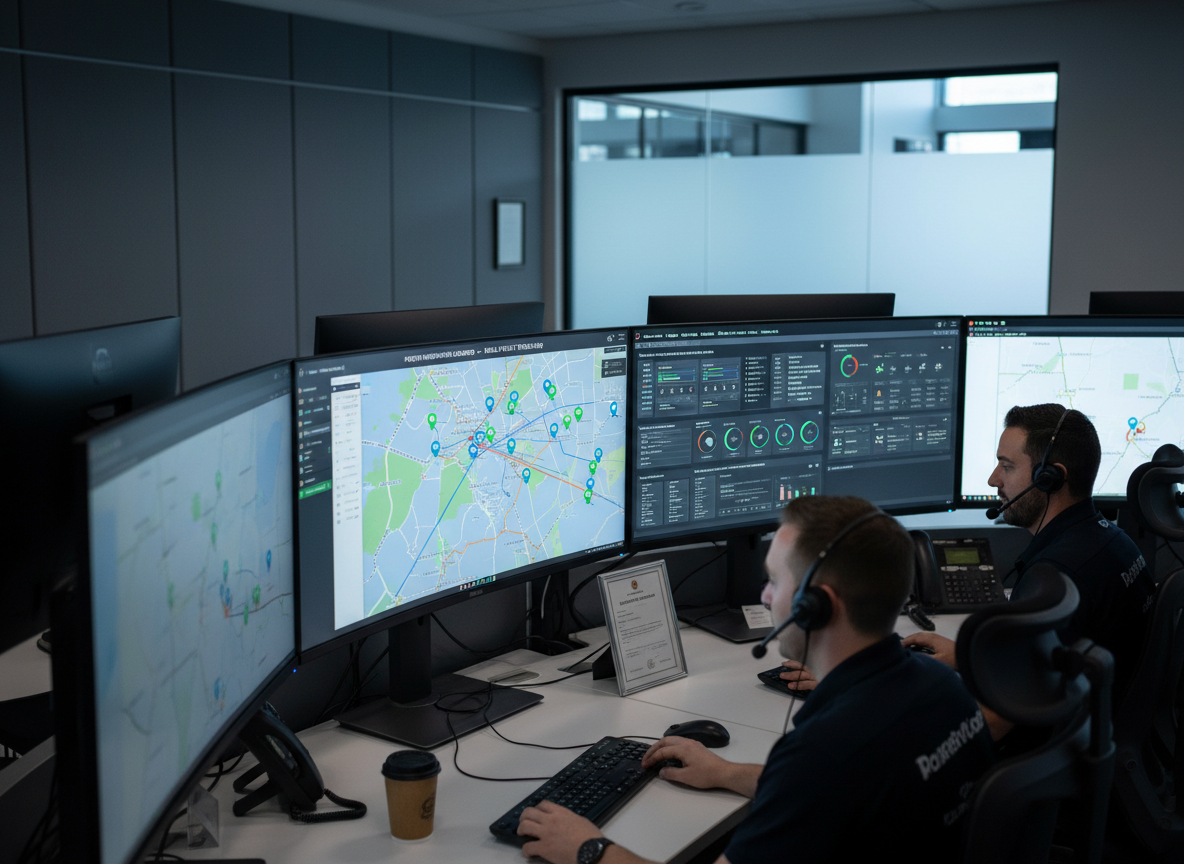
Contactless payment is part of our broader commitment to making safe car towing services as smooth as possible. It’s the same reason we invested in GPS tracking, real-time job updates, and 24/7 dispatch systems. Every small improvement compounds into a better experience when you need us most.
How to Use Contactless Payment With All Out Towing
When you book with All Out Towing, contactless payment is automatically available. You don’t need to request it or set anything up in advance.
If you’re calling for emergency service, just let our dispatcher know you’d prefer contactless payment, and we’ll flag it on the job. When our operator arrives, they’ll have everything ready to go.
If you’re booking online for a scheduled move-maybe transporting a prestige vehicle to a show or relocating heavy machinery to a new site-you can pre-authorise payment during booking. We’ll send a confirmation, and the final charge processes automatically once the job is complete.
For customers who need roadside assistance like a jump start or tyre change, contactless payment works the same way. Tap, approve, and you’re back on the road.
Conclusion
Contactless towing payment Perth services aren’t just about keeping up with technology-they’re about respecting your time and reducing stress during an already difficult situation. When you’re broken down, every minute matters. Fast, secure, transparent payment processing gets you off the roadside quicker and gives you one less thing to worry about.
We’ve seen firsthand how this technology improves outcomes for our customers. Faster transactions mean shorter roadside exposure. Digital receipts eliminate disputes. Transparent pricing builds trust. And ultimately, it lets us focus on what we do best: getting your vehicle to safety as quickly and professionally as possible.
Whether you’re dealing with a midnight breakdown, coordinating accident recovery, or planning a specialised transport job, contactless payment makes the entire process smoother. It’s one less thing to think about on what’s probably already a stressful day.
If you need towing or transport services anywhere in Perth, get in touch with our team. We’re available 24/7, and contactless payment is ready to go on every job.