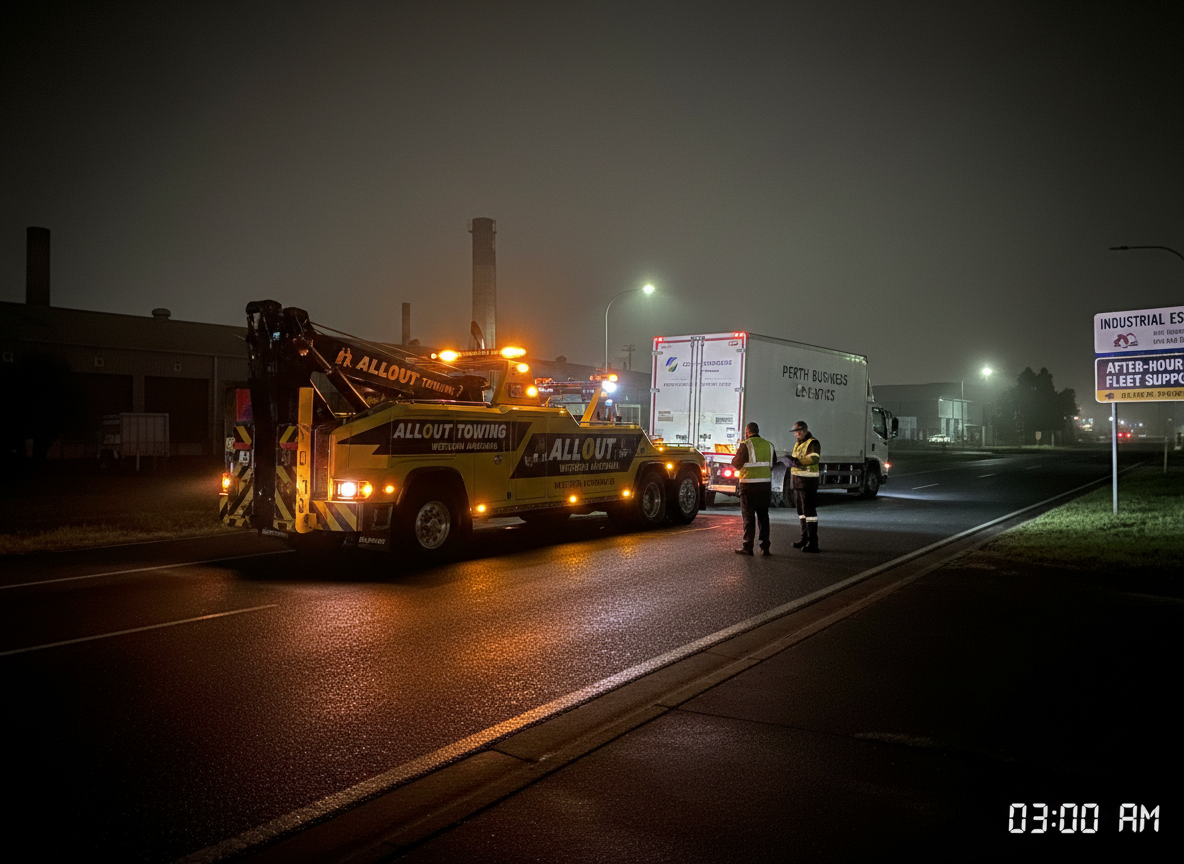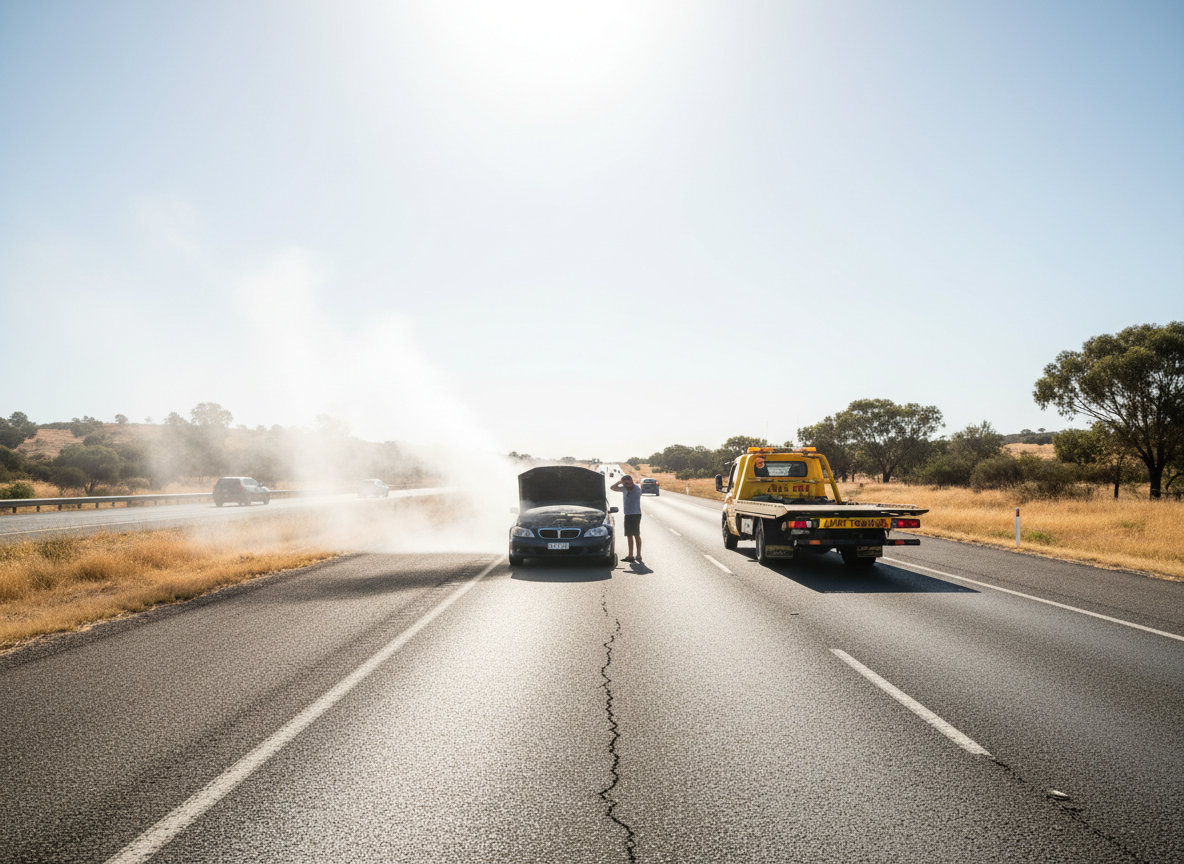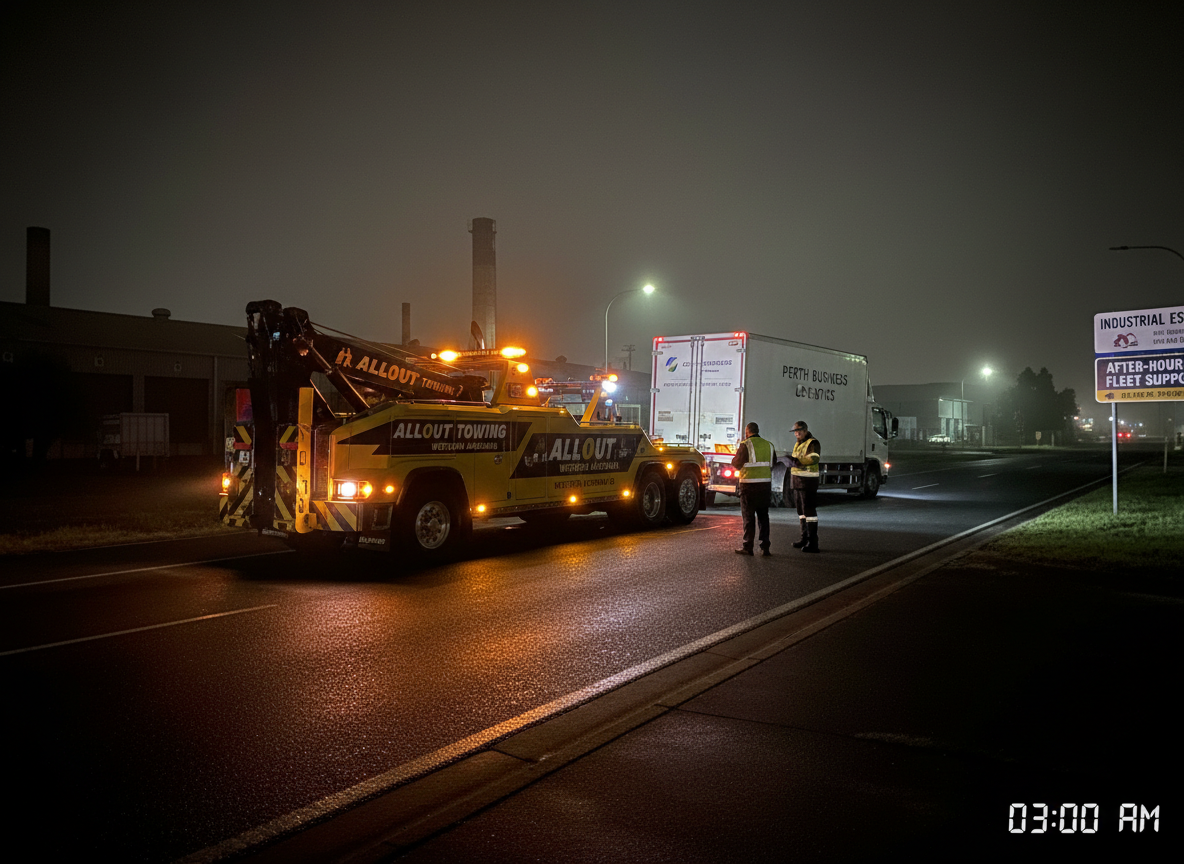
When a company vehicle breaks down on the Mitchell Freeway during peak hour, the next 15 minutes determine whether you’re dealing with a minor inconvenience or a major safety incident. Your driver’s response in those critical moments-whether they panic, make unsafe decisions, or follow a clear protocol-reflects directly on how well you’ve prepared your team.
We’ve recovered hundreds of commercial vehicles across Perth, and the difference between companies with trained staff and those without is stark. Trained drivers secure the scene properly, communicate clearly, and keep themselves safe. Untrained ones often stand too close to traffic, forget to activate hazards, or don’t know who to call first.
Company vehicle breakdown Perth incidents aren’t just about getting the vehicle fixed. They’re about protecting your people, managing liability, minimising downtime, and maintaining your business reputation. Every driver in your fleet needs to know exactly what to do when-not if-their vehicle fails.
Why Perth Businesses Need Documented Breakdown Protocols
Perth’s road network presents unique challenges for commercial vehicle operators. The sprawling metropolitan area means your drivers could break down anywhere from the Kwinana Freeway to remote northern suburbs, each location requiring different response strategies.
Without clear procedures, drivers default to guesswork. They might call their supervisor first instead of securing the scene. They might accept help from unauthorised tow operators. They might leave the vehicle unattended or fail to document damage properly.
Documented protocols eliminate this uncertainty. They provide step-by-step guidance that works regardless of the driver’s experience level, the time of day, or the breakdown location. Think of it like an emergency evacuation plan-you hope you’ll never need it, but when you do, everyone knows their role.
The legal considerations matter too. If a breakdown leads to a secondary accident because your driver didn’t follow proper safety procedures, your business faces potential liability. Documented training demonstrates due diligence and shows you’ve taken reasonable steps to protect both employees and the public.
Essential Elements Every Breakdown Procedure Must Include
A comprehensive breakdown procedure covers six critical phases: immediate safety actions, scene assessment, communication protocols, vehicle security, towing coordination, and post-incident reporting. Each phase requires specific actions in a specific order.
Immediate safety comes first, always. Your driver’s first action should be activating hazard lights-before they even pull over if possible. Then they need to move the vehicle as far from active traffic as conditions allow. On freeways, this means the emergency lane. On suburban streets, it means well off the road surface.
Once stopped, drivers must assess whether it’s safe to exit the vehicle. On high-speed roads like Tonkin Highway, staying inside with a seatbelt fastened is often safer than standing outside. If they do exit, they should use the passenger side door away from traffic and move well behind the vehicle.
Warning triangle or hazard beacon placement follows specific distance rules. In built-up areas, place them at least 50 metres behind the vehicle. On highways, extend this to 100-150 metres. Many drivers don’t realise these devices are legally required in commercial vehicles in WA.
Your procedure should specify exactly who to contact and in what order. Typically this means emergency services (000) if there’s any injury, fuel spill, or immediate danger, your designated fleet manager or supervisor to report the incident, and your authorised towing provider once the scene is secure.
Never leave drivers guessing about these contact sequences. Print them on a laminated card in every vehicle’s glovebox.
Training Your Team to Assess Breakdown Severity
Not all breakdowns require the same response. A flat tyre in a car park differs vastly from an engine fire on the freeway, yet many drivers lack the framework to distinguish between minor issues and genuine emergencies.
Teach your team to categorise breakdowns into three levels: safe to wait, needs immediate towing, and emergency response required. This classification determines everything that follows.
Safe-to-wait situations include mechanical failures in secure locations-shopping centre car parks, depot yards, or wide residential streets with minimal traffic. The vehicle isn’t blocking traffic, there’s no safety risk, and standard towing during business hours is appropriate.
Immediate towing situations involve breakdowns in risky locations: freeway emergency lanes, busy intersections, narrow streets, or anywhere the vehicle creates a hazard. These require our 24-hour emergency towing services to remove the vehicle quickly and safely.
Emergency responses involve fire, fuel leaks, injuries, or vehicles blocking all lanes of traffic. These situations require 000 first, then your towing provider. Your drivers need to recognise these scenarios instantly and act accordingly with proper fleet breakdown protocol training.
Consider role-playing these scenarios during training. Present your team with different breakdown situations and have them talk through their response step-by-step. You’ll quickly identify gaps in their understanding.
Creating Location-Specific Response Plans for Perth Roads
A breakdown on Albany Highway requires different tactics than one on the Forrest Highway. Perth’s diverse road network-from congested urban streets to high-speed rural highways-demands location-aware protocols.
High-speed roads (freeways and highways) present the greatest danger. On roads like the Kwinana Freeway or Great Eastern Highway, drivers should prioritise getting completely off the travelled lanes, even if this means driving on a flat tyre for 200 metres to reach an emergency bay. Staying in the vehicle with hazards on and calling for help immediately is usually safer than attempting repairs.
Urban arterial roads like Wanneroo Road or Canning Highway offer more options but still require caution. If the vehicle can safely limp into a side street or car park, that’s almost always preferable to stopping on the main road. Your drivers need permission to prioritise safety over protecting the vehicle from minor additional damage.
Industrial areas and depot zones typically provide safer breakdown environments. Drivers have more time to assess the situation, photograph the vehicle, and wait for assistance without immediate danger. These locations allow for more thorough documentation before the vehicle is moved.
Train your team to recognise Perth’s emergency telephone locations on freeways-those blue signs with phone symbols. Even with mobile phones, these provide exact location data to emergency services and our towing operators, speeding up response times significantly.
Communication Protocols That Prevent Confusion and Delays
When a driver calls to report a breakdown, the information they provide determines how quickly and effectively we can respond. Yet many drivers, especially those under stress, forget critical details or communicate them in the wrong order.
Implement a structured reporting format that your drivers memorise. We recommend the LOCATION-VEHICLE-SITUATION format:
Location first (exact address or freeway marker, direction of travel, and nearest landmark), vehicle details (registration, make, model, and what you’re carrying), and situation summary (what failed, any hazards present, and whether anyone is injured).
This sequence ensures the most critical information comes first. If the call drops or the driver is flustered, you’ve at least captured enough to send help to the right place.
Your procedure should specify response timeframes for different breakdown types. Let drivers know they can expect a supervisor callback within 10 minutes and towing arrival within 30-45 minutes for emergency situations, or 1-2 hours for non-urgent recoveries during business hours.
Document everything with photos. Modern smartphones make this simple, yet many drivers forget in the moment. Train them to photograph the vehicle’s position relative to the road, any damage, warning devices in place, and the odometer reading. These images protect your business from disputed damage claims and provide valuable incident records.
Coordinating with Professional Towing Services
The relationship between your business and your towing provider shouldn’t begin when a vehicle breaks down. Establishing this partnership in advance streamlines responses and eliminates confusion when time matters most.
Pre-authorised towing arrangements remove decision-making from stressed drivers. They simply call the number you’ve provided, identify themselves as your employee, and we handle the rest using your pre-approved service level. This prevents unauthorised operators from approaching your drivers with inflated quotes or inappropriate towing methods.
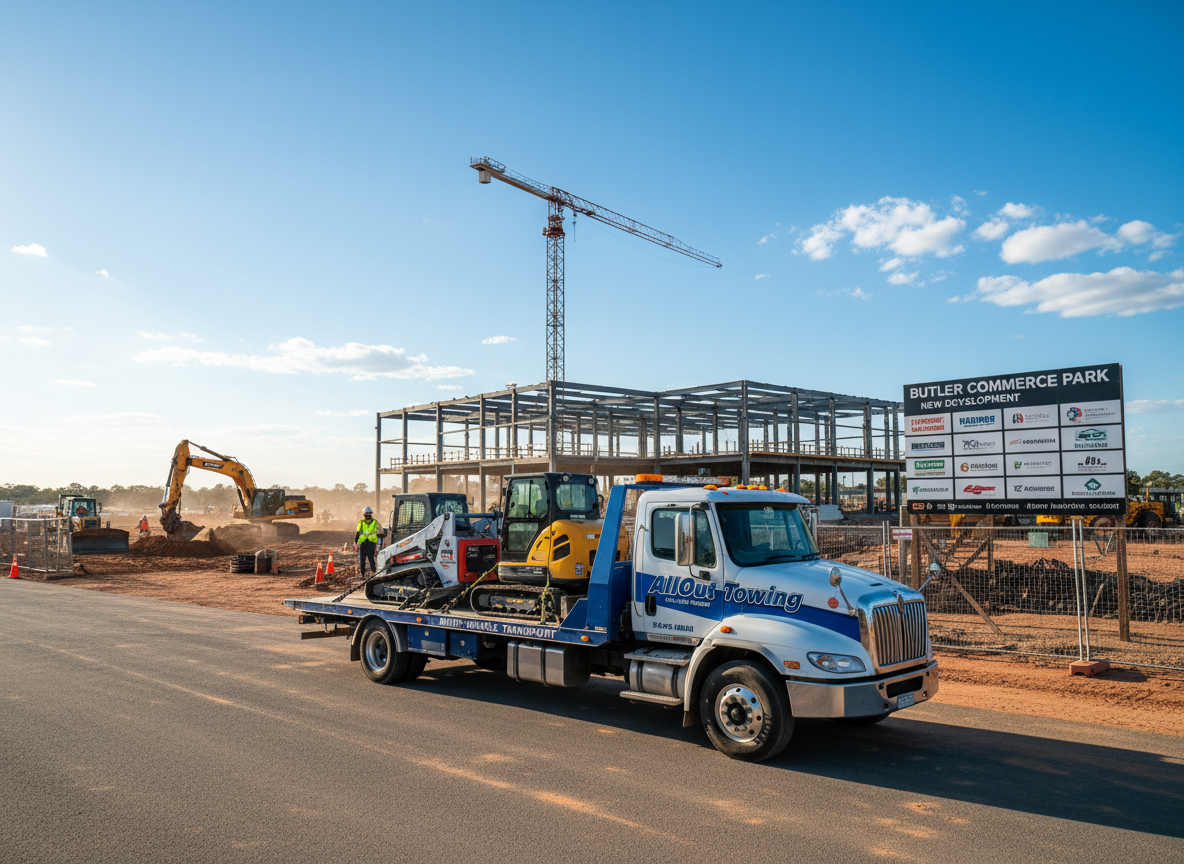
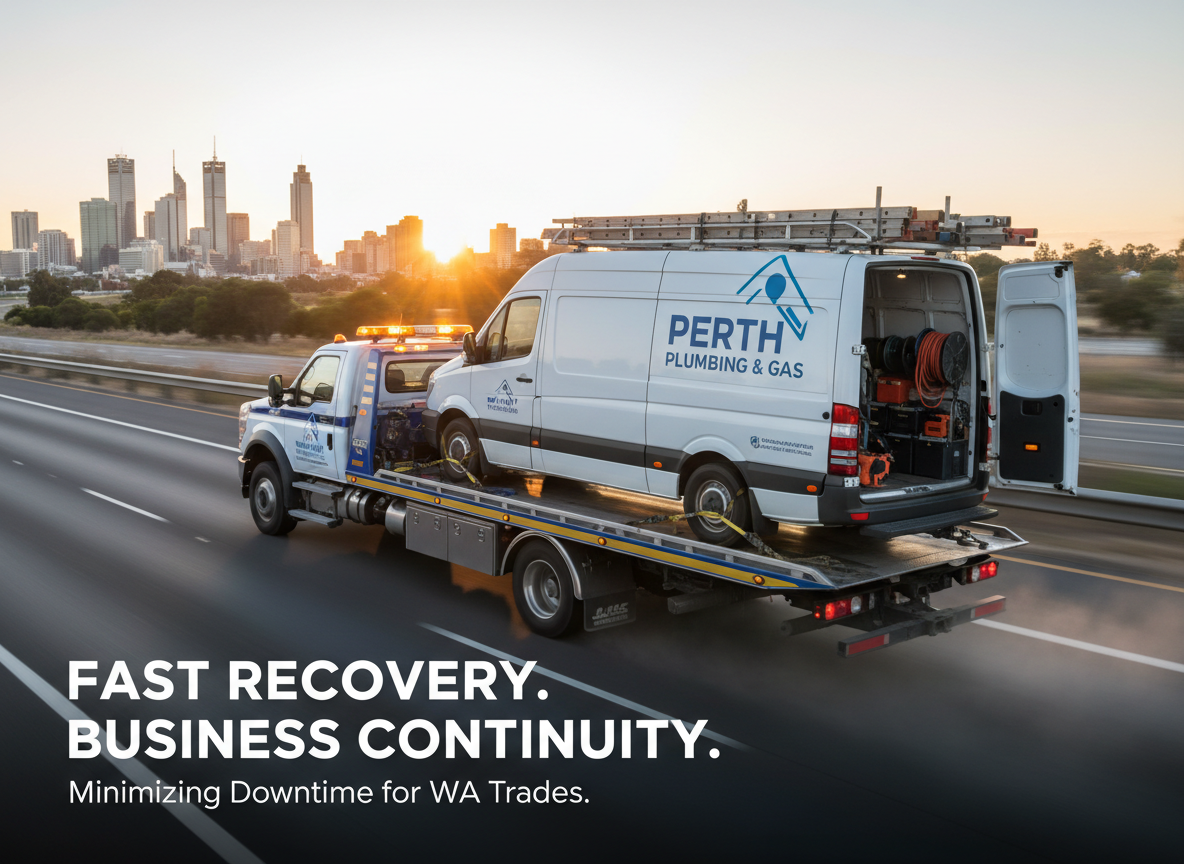
Different commercial vehicles require different towing approaches. A standard ute or sedan works fine on a conventional tow truck, but larger vehicles need specific equipment. Your drivers should understand these distinctions: light commercial vehicles (utes, vans) use standard towing or tilt tray services depending on drivetrain, 4WD and AWD vehicles always require flatbed towing to prevent drivetrain damage, light trucks (up to 4.5 tonnes) need truck towing services with appropriate capacity, and vehicles carrying equipment or machinery may need specialised towing solutions depending on load.
When you work with All Out Towing, we maintain your fleet details on file-vehicle specifications, preferred destinations, and authorised decision-makers. This eliminates repetitive information-gathering during emergencies and ensures the right equipment arrives first time.
Destination decisions should be predetermined too. Does the vehicle go to your preferred mechanic, your depot, or our secure holding yard? Having these arrangements documented prevents delays while supervisors debate options.
Managing Vehicle Security During Breakdown Events
Commercial vehicles often contain tools, equipment, stock, or sensitive business materials. A breakdown doesn’t pause your responsibility to protect these assets, yet security often becomes an afterthought during the stress of roadside emergencies.
Your procedure must address asset security explicitly. Drivers need clear instructions about what to remove from the vehicle, what to secure, and what to document. This varies by vehicle type and contents, but basic principles apply universally.
High-value tools and equipment should be removed and transported separately when possible. If a tradie’s ute breaks down with $15,000 worth of power tools in the tray, those tools shouldn’t ride unattended on the tow truck if alternative arrangements are feasible.
Documentation prevents disputes. Before the vehicle is towed, drivers should photograph the contents, note any pre-existing damage, and record the odometer reading. If your vehicles carry stock or customer property, this documentation becomes even more critical.
Secure all loose items inside the vehicle before towing. Open toolboxes, unsecured equipment, and loose materials can shift during transport, causing damage or creating hazards. Your drivers need to know this is their responsibility, not the towing operator’s.
For vehicles that must be left overnight or stored, understand your towing provider’s security arrangements. We maintain a fully fenced, monitored yard for vehicles requiring secure storage, but drivers should still remove high-value portable items when practical.
Post-Breakdown Reporting and Continuous Improvement
The breakdown doesn’t end when the vehicle reaches the workshop. Proper post-incident reporting captures lessons, identifies patterns, and helps prevent future failures-yet many businesses treat this as optional paperwork rather than valuable intelligence.
Implement a standardised incident report that drivers complete within 24 hours. This should capture what failed, any warning signs beforehand, actions taken, response times, and any safety concerns. Keep the format simple-a one-page form or digital submission that takes 10 minutes to complete.
This data reveals patterns you’d otherwise miss. If three vehicles from the same model range experience similar failures, you’ve identified a maintenance issue. If breakdowns cluster in specific areas, you might need to adjust routes or pre-trip inspection protocols.
Review breakdown procedures quarterly with your team. Walk through recent incidents, discuss what worked, and identify improvements. This reinforces training and demonstrates your commitment to safety and continuous improvement.
Track your key metrics: average response time, breakdown frequency by vehicle, repeat failures, and safety incident rates. These numbers guide fleet maintenance decisions and help justify investment in preventive measures.
Don’t forget the human element. A breakdown can be genuinely stressful for drivers, especially if it occurs in a dangerous location or involves a near-miss. Check in with your team after significant incidents and address any concerns about vehicle safety or maintenance standards.
Building a Breakdown Response Kit for Every Vehicle
Theory becomes practice when your vehicles carry the physical tools drivers need to respond safely. A properly equipped breakdown kit transforms abstract procedures into concrete actions.
Every commercial vehicle should carry warning triangles or portable hazard beacons (legally required), high-visibility vests for all occupants, first aid kit (also legally required), fire extinguisher rated for vehicle fires, torch with spare batteries, basic tools appropriate to the vehicle type, laminated emergency procedure card with contact numbers, and notebook and pen for documentation.
For vehicles operating in remote areas or after hours, expand this kit to include water, emergency blankets, and additional lighting. The small investment in these items pays enormous dividends during an actual breakdown.
The laminated procedure card deserves special attention. This single-page reference should be in every glovebox, providing step-by-step guidance and all critical phone numbers. Design it with large, clear text that’s readable under stress and poor lighting. Include your company’s procedure, our contact details, and emergency services numbers.
Inspect these kits during regular vehicle checks. Warning triangles get damaged, batteries die, and items go missing. A breakdown kit only helps if it’s complete and functional when needed.
Making Procedures Stick
The best procedures fail if drivers don’t remember them under pressure. Making these protocols stick requires more than distributing a manual and hoping people read it.
Repetition builds retention. Include breakdown procedure reminders in regular team meetings, safety briefings, and driver communications. When you discuss a recent incident, walk through how the driver applied the procedure and what they learned.
Visual aids work better than text alone. Create a simple flowchart showing the decision tree from “vehicle fails” through “vehicle recovered.” Post this in your depot, include it in vehicles, and reference it during training.
Celebrate successful responses. When a driver handles a breakdown exactly right-securing the scene, communicating clearly, and following procedures-recognise this publicly. Positive reinforcement teaches more effectively than criticism.
Make procedures accessible. Beyond the printed card in each vehicle, maintain digital versions on your company intranet or shared drive. Drivers should be able to review procedures quickly whenever questions arise.
Test understanding through scenarios rather than memorisation. Ask drivers: “Your ute breaks down on Roe Highway during peak hour-what’s your first action?” Their response reveals whether they’ve internalised the procedure or just read it once.
The Business Case: Cost and Reputation Protection
Comprehensive breakdown procedures require investment-time for training, equipment for vehicles, and systems for coordination. Yet this investment returns multiples through reduced costs, protected reputation, and improved safety outcomes.
Unmanaged breakdowns cost more in every dimension. A vehicle stuck in a dangerous location for an extra hour because the driver didn’t know who to call costs money in towing fees, lost productivity, and increased accident risk. A driver who accepts help from an unauthorised operator might pay double the reasonable rate.
Reputation damage from poorly handled breakdowns extends beyond the immediate incident. If your branded vehicle blocks traffic for hours due to poor response coordination, that’s what customers remember. If your driver behaves unprofessionally during a roadside emergency, it reflects on your entire business.
Insurance premiums respond to incident rates. Businesses with strong safety records and documented procedures often negotiate better rates than those with frequent claims and poor safety cultures. Your breakdown procedures contribute directly to this risk profile.
Lost productivity from extended vehicle downtime affects your bottom line. Quick, professional breakdown responses get vehicles repaired and back in service faster than chaotic, uncoordinated efforts.
The peace of mind factor matters too. When you’ve trained your team thoroughly and provided clear procedures, you don’t worry every time a vehicle leaves the depot. You know your people can handle whatever happens safely and professionally.
Moving Forward: Implementing These Procedures in Your Business
Reading about breakdown procedures and implementing them are different challenges. If you’re starting from scratch or improving existing protocols, a structured approach ensures nothing gets missed.
Start with documentation. Write down your procedures using the framework we’ve outlined-immediate safety, communication, towing coordination, and post-incident reporting. Keep it simple enough that any driver can follow it under stress.
Consult your team during development. Drivers who’ve experienced breakdowns firsthand offer valuable insights into what works practically versus what sounds good on paper. Their input increases buy-in and improves procedure quality.
Establish your towing partnership before you need it. Contact us to discuss your fleet, typical operating areas, and service level requirements. Pre-authorised arrangements eliminate delays and confusion during actual emergencies.
Conduct initial training for all drivers, then schedule regular refreshers. Annual updates keep procedures current and maintain awareness. Include new hires in training during their induction period.
Test your procedures through simulation exercises. Stage a breakdown scenario and evaluate your team’s response. This practical assessment reveals gaps that classroom training misses and builds confidence for real situations.
When you’re ready to establish professional company vehicle breakdown Perth procedures that actually work when your team needs them, contact us to discuss how we can support your fleet operations. At All Out Towing, we understand that trained drivers and documented procedures make the difference between minor incidents and major disruptions.
Because when your company vehicles break down-and eventually they will-your team’s response in those critical first minutes determines everything that follows. Make sure they’re ready.