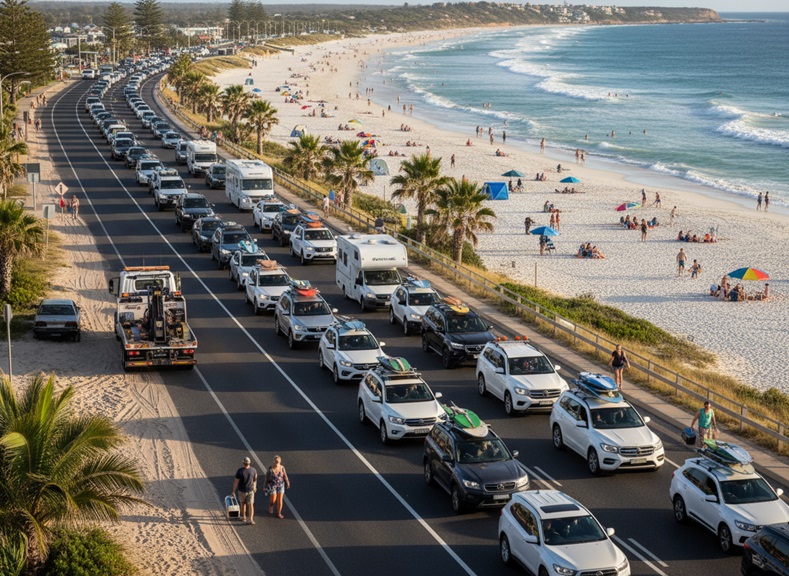
WA’s coastline draws big crowds for good reason – white sand, turquoise water, and wide-open skies. The reality on peak weekends is different: heavy holiday traffic, soft beach access tracks, salt air that attacks electrics, and long stretches of road far from help. When things go wrong, being prepared makes all the difference between a quick recovery and a ruined weekend.
Coastal driving isn’t like city driving. Roads behave differently, vehicles face unique stresses, and help can be a long way off. Understanding the risks isn’t alarmist – it’s smart preparation.
Why Coastal Roads Test Vehicles Differently
Coastal environments accelerate wear in ways urban conditions don’t. Salt air speeds corrosion on battery terminals and electrical connections, which is why batteries that seem fine in the suburbs can fail near the ocean. Sand infiltrates brakes, air filters, and undercarriage components. Even a small splash through saltwater can start corrosion within days if not properly cleaned off.
Heat adds another layer of stress. A car baking on the beach can reach interior temperatures above 70°C. That strains the cooling system and battery. Then the air conditioning is switched on at full blast, pushing the engine harder just as it’s at its limit.
Access roads to coastal areas often make conditions worse. Many are unsealed, corrugated, or soft-shouldered, and traffic volumes spike during school holidays. The combination of ruts, dust, and soft edges means extra care and mechanical sympathy are needed to avoid damage or overheating.
Holiday Traffic: More Than Just Delays
Holiday traffic on WA’s coastal routes isn’t just about sitting in a queue. Stop-start driving in 40°C heat puts continuous strain on cooling systems, transmissions, and fuel consumption. Cars idle for long periods with the air con blasting, fans running constantly, and radiators under pressure.
Driver fatigue also plays a big part. After hours of crawling traffic, frustration builds and risky decisions follow – overtaking on blind bends, pulling onto soft shoulders, or pushing a hot engine harder than it can handle. It’s no surprise breakdown calls spike during long weekends.
Sand and Saltwater: The Twin Enemies
Beach driving demands skill and preparation. Tyres at normal road pressure tend to sink. Reducing pressure to 16–18 PSI (depending on vehicle weight and sand softness) spreads the contact patch and helps maintain momentum. Stop suddenly, and you’re stuck; accelerate too hard, and tyres dig deeper.
Think of driving on soft sand with road-pressure tyres like walking across a beanbag in stiff shoes – you don’t glide, you sink. Adjusting pressure is the difference between cruising and bogging.
Beach access points are often where it goes wrong. The shift from firm track to soft sand robs momentum, and by the time you react, the tyres have buried. Saltwater exposure is another silent destroyer. Even a small splash coats the suspension, exhaust, and chassis with salt residue. Without a thorough wash within a day or two, corrosion begins almost immediately.
When to Call for Professional Help
Knowing when to stop and call professionals prevents small issues from turning serious. If every wheel spin digs you deeper, stop. Each attempt makes recovery harder and increases the risk of damage.
Mechanical faults on the coast escalate quickly. Limited shade, patchy phone reception, and narrow verges make it dangerous to keep driving a vehicle that’s overheating or misfiring. In these cases, coastal towing WA operators provide a safe, reliable solution.
If a rising tide is a factor, time is critical. Saltwater and vehicle electronics are a costly mix. Early recovery is always cheaper and safer than waiting too long. Modern cars with electronic handbrakes, all-wheel drive systems, or low ground clearance are best recovered using our tilt tray services for damage-free transport.
Preparing Your Vehicle for Coastal Trips
Prevention always beats recovery. Before any coastal trip, make sure your vehicle is ready.
Cooling system: Check coolant levels, inspect hoses, and make sure your radiator is clean and unblocked. Overheating remains the most common breakdown during summer trips.
Battery and electrics: Clean and secure terminals, apply protective spray, and test batteries older than three years. Salt air plus heat can quickly finish off a weak cell.
Tyres: Inspect tread depth and sidewalls. Carry a full-size spare and know where your jack points are. Remember – soft sand won’t support a jack without a base plate.
Recovery gear:
- Tyre pressure gauge and 12V compressor
- Metal shovel
- Recovery boards or mats
- Rated tow strap and shackles
- Basic tools and torch
- Extra water for you and for cooling if needed
Navigation and communication: Charge phones, download offline maps, and note coverage gaps. If travelling into remote areas, share your route and expected return time.
What Professional Coastal Recovery Involves
Professional towing services WA coast operators handle more than simple hook-ups. Coastal recovery begins with assessment: how deep the bogging is, sand type, tide level, and safe extraction angle. Pulling from the wrong direction or with unsuitable gear can damage the suspension or recovery points.
Certified operators use rated equipment and recovery points, applying steady tension rather than sudden jerks. Flatbeds are used for vehicles with low clearance or AWD systems. If fluids have leaked, containment is managed before towing.
Destination options vary depending on the situation. Sometimes the smartest move is towing to a nearby workshop or accommodation rather than attempting a long drive while tired. For Perth and regional recoveries, teams like All Out Towing provide fast response and safe transport for coastal vehicles.
The Real Costs of Coastal Breakdowns
Coastal incidents tend to cost more than urban breakdowns. Distances are longer, and accommodation adds up if repairs take overnight. DIY recoveries often cause more damage – overheated transmissions, broken tow points, or salt-flooded electronics can each cost thousands.
Environmental penalties can also apply. Recovering a vehicle from restricted dunes or damaging vegetation can lead to fines and restoration costs from local authorities. Calling professionals early avoids both mechanical and environmental harm.
If You Get Stuck: What to Do Immediately
- Stay safe. Move off the traffic lane or out of the tide’s reach. Turn on hazard lights and set up warning triangles if you have them.
- Stop after three attempts. If your first few tries fail, continuing will only dig deeper.
- Call for help early. Don’t wait until dark or low tide. Make the call while you can still clearly describe your location.
- Document your location. Use GPS coordinates and note landmarks to help responders find you quickly.
- Stay with the vehicle. Unless there’s immediate danger, your car is the safest place to wait.
If you need after-hours support or recovery from remote coastal tracks, our 24-hour emergency towing is available anytime across Perth and along major coastal routes. You can also get in touch for professional advice or recovery arrangements.
Building Confidence for Future Coastal Drives
Start small before exploring remote beaches. Take a sand-driving course to learn correct tyre pressure management, recovery techniques, and momentum control. Join local WA driving communities for current beach access updates, tide tips, and real-world advice.
Create a quick pre-trip checklist: tyres, cooling system, battery, recovery gear, route plan, weather, and tides. Making it a habit turns preparation into confidence.