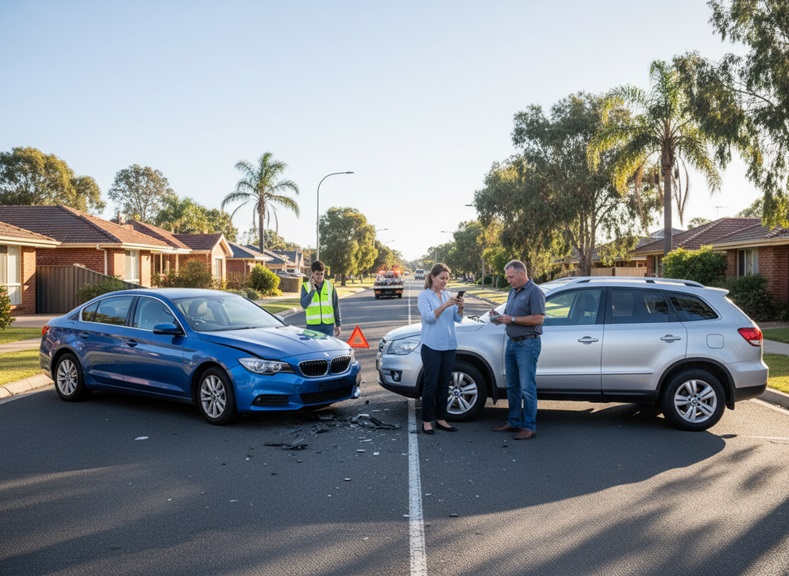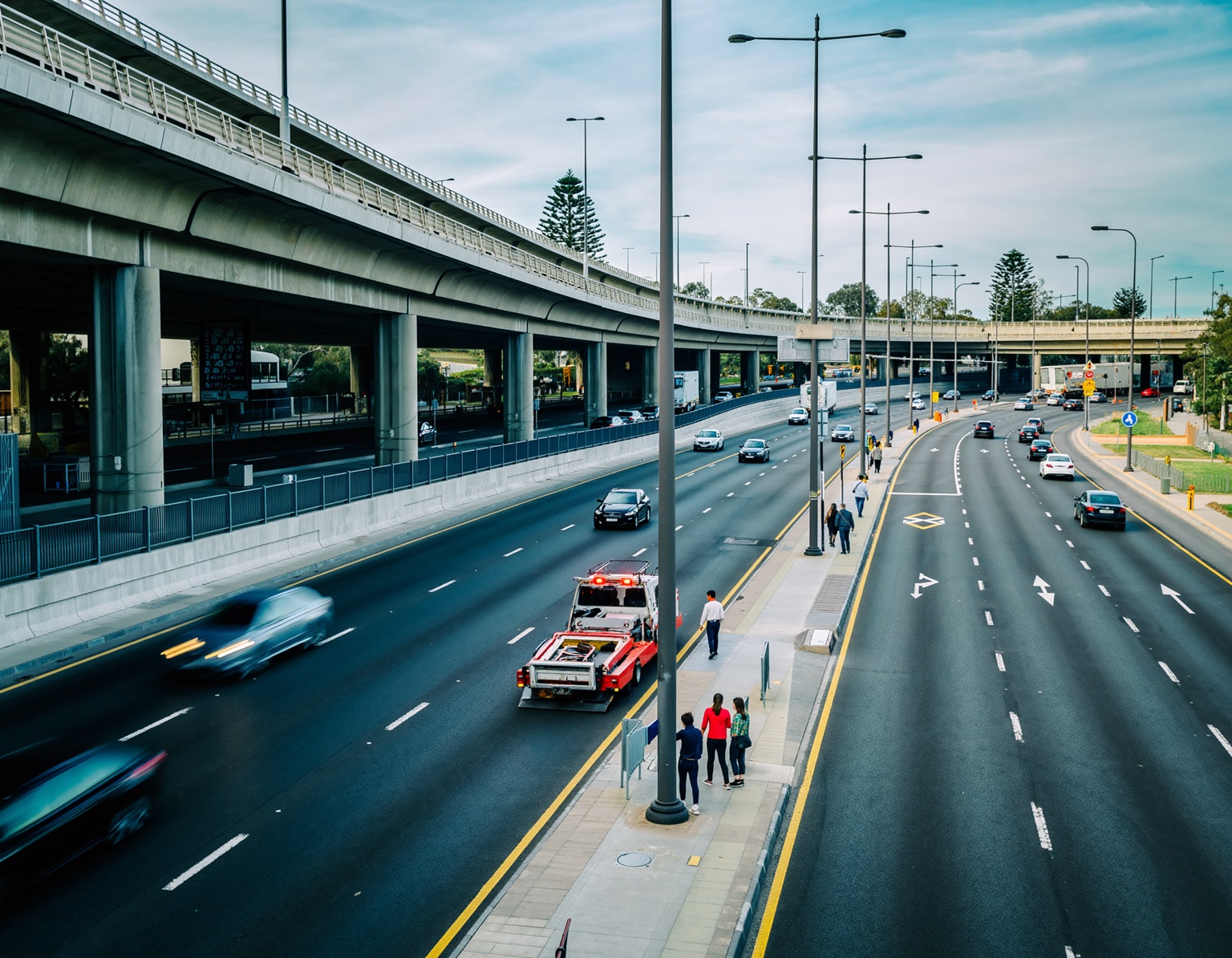
You’re cruising along the Mitchell Freeway when your engine starts making that sound. You know the one – the noise that tells you something’s about to go very wrong. Within seconds, you’re losing power, and now you’re stuck on the shoulder of one of Perth’s busiest roads with trucks thundering past at 100 km/h.
Your heart’s racing. Your phone’s in your hand. But what happens in the next few minutes can make all the difference between a stressful inconvenience and a genuinely dangerous situation.
Highway breakdowns are frightening because you’re exposed, vulnerable, and surrounded by fast-moving traffic. The gap between knowing you should “stay calm” and actually feeling safe is massive when you’re watching cars zoom past centimetres from your door. Here’s what actually keeps you safe while you wait for help to arrive.
Why Highway Breakdown Safety in WA Matters
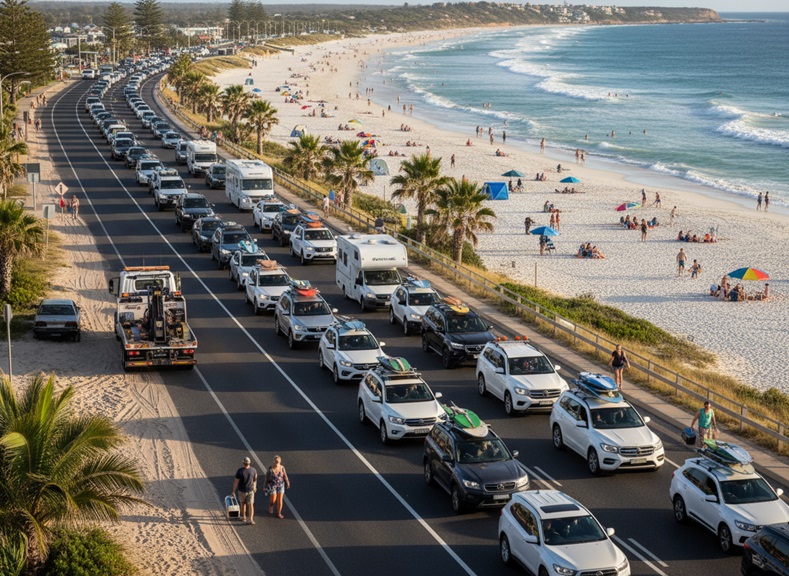
Breaking down on a quiet suburban street is one thing. Breaking down on the Kwinana Freeway during peak hour is something else entirely.
The fear isn’t irrational. According to Main Roads WA, highways account for a large number of secondary incidents – crashes that happen because someone’s already stopped on the road. When you’re stationary and everyone else is moving at highway speeds, the reaction window is tiny.
You’re also dealing with the psychological pressure of feeling like you’re causing a problem. Drivers behind you are swerving, some are honking, and you’re acutely aware that you’re creating a hazard just by being there. That pressure can push you into rushed decisions, like trying to fix the problem yourself or staying in the car when you shouldn’t.
The truth is, highway breakdown safety in WA isn’t just about what you do with your car. It’s about staying calm, managing stress, and making smart choices in a high-risk environment.
Get Off the Road (If You Possibly Can)
If your car’s still moving – even if it’s coughing and protesting – your first priority is getting it as far off the highway as possible.
Aim for the left shoulder, and get as far left as you can. Don’t just clip the white line. You want maximum distance between your car and moving traffic. If you can reach an emergency stopping bay or exit ramp, even better.
Our team once assisted a driver on Tonkin Highway whose car stopped half in the left lane. Understandably, they’d panicked and hit the brakes where they were. Those extra seconds of coasting onto the shoulder could’ve made all the difference.
If your car dies completely and you can’t get it moving, don’t try to push it yourself. You’ll be standing in live traffic, which is extremely dangerous. That’s when you call for professional roadside assistance immediately.
The First 60 Seconds: What to Do Right Now
Once you’ve stopped, your brain’s going to be racing. Focus on these key actions in the first minute:
- Turn on your hazard lights straight away – even during the day.
- Assess whether it’s safe to stay in the car. If you’re well off the road and protected by a barrier, staying buckled in is usually safest.
- Exit through the passenger side only if you must get out. Leave everything except your phone and wallet.
- Move behind a barrier if one’s available. Otherwise, move well away from traffic – onto the grass or an embankment.
It can feel wrong to leave your car behind, but here’s the reality: cars are replaceable. You’re not.
Call for Help (And Know What to Say)
Once you’re safe, it’s time to get assistance. If you’re blocking a lane, call 000 first so police or traffic management can protect you.
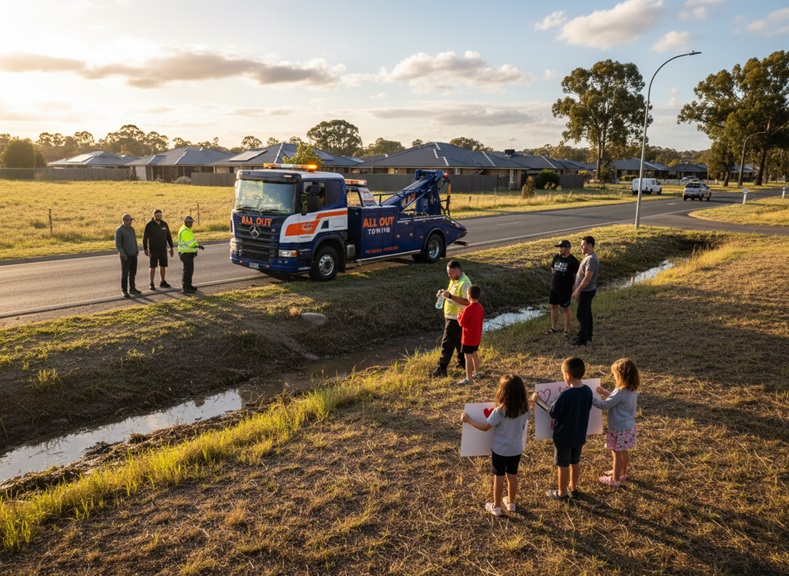
For breakdowns where you’re safely off the road, call your roadside assistance provider or a local towing service like All Out Towing. Our team has been helping WA drivers through highway breakdowns for years, and we know every tricky stretch of road around Perth.
When you call, provide:
- Exact location (highway name, direction, nearest exit or landmark)
- Which side of the road you’re on
- Your vehicle description (colour, make, model)
- Whether you’re in or out of the car
- What happened (overheating, flat tyre, engine failure, etc.)
If you’re not sure where you are, check the small green distance markers along the roadside. They’re placed roughly every 100 metres and help us find you fast.
The Guilt You’re Probably Feeling (And Why It’s Misplaced)
There’s a good chance you’re feeling embarrassed or guilty. Maybe you think you should’ve seen it coming, or that you’re holding everyone up.
Mechanical failures happen to everyone. Our team has towed brand-new vehicles with electronic faults and immaculately maintained cars that simply chose the wrong moment to fail. You’re not careless or unlucky – you’re just dealing with how machines behave sometimes.
Don’t let guilt push you into unsafe decisions, like trying to fix the issue yourself or waving off help. Your safety is worth the cost of a tow, worth the wait, and worth every precaution.
What Not to Do (Even Though You’ll Be Tempted)
Highway stress and adrenaline can make bad ideas sound reasonable. Here’s what not to do:
- Don’t repair the car on the shoulder. It’s like trying to change a light bulb in the middle of a storm – the risk isn’t worth it.
- Don’t accept help from strangers. Thank them politely and say help’s on the way.
- Don’t walk along the highway to find help. Drivers won’t expect pedestrians at 100 km/h speeds.
- Don’t stand near your car if the shoulder’s narrow. Distance is your best protection.
If You’re Stuck After Dark
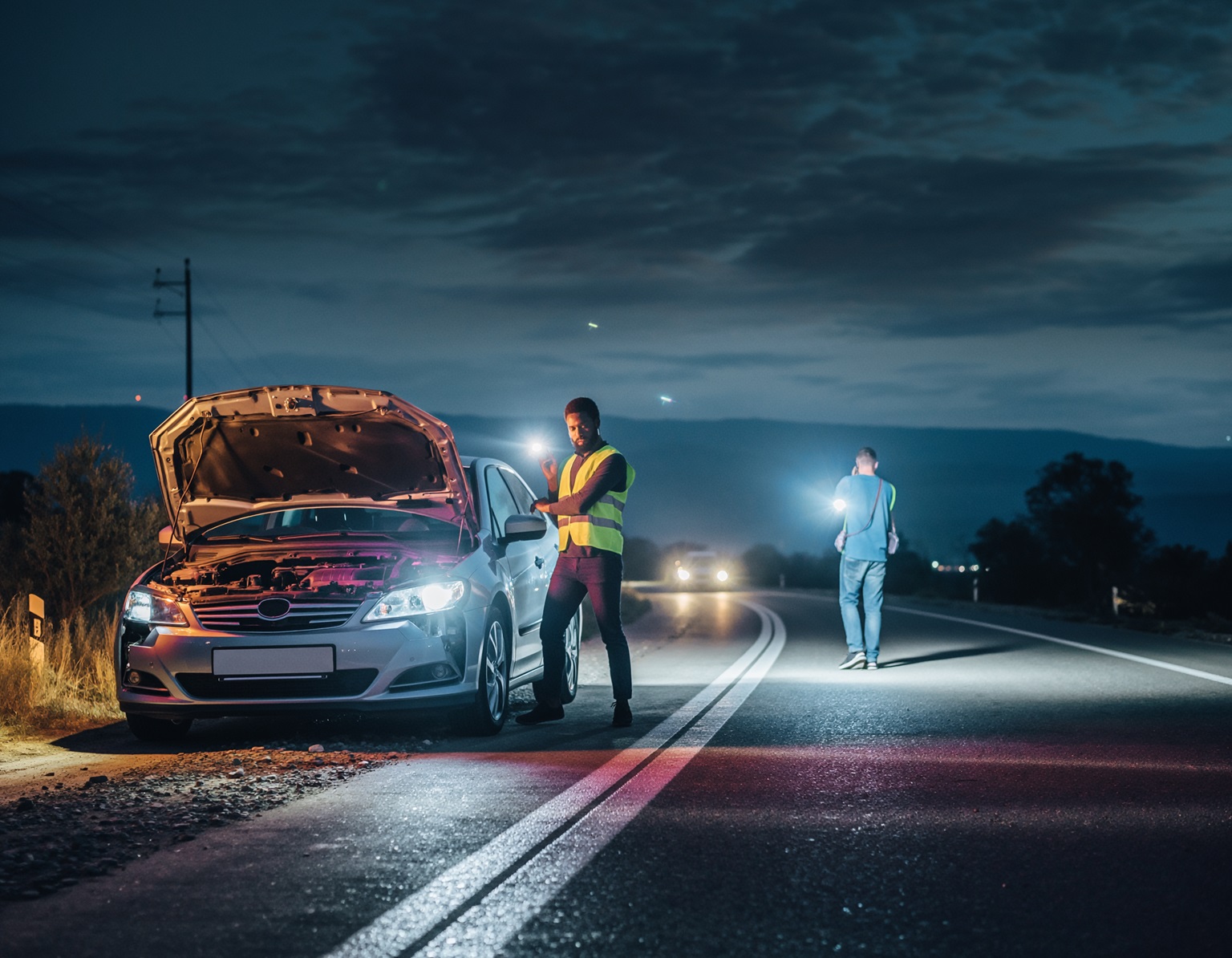
Nighttime breakdowns bring new challenges. Visibility drops, fatigue rises, and it’s harder for traffic to spot you.
- Keep hazard lights flashing.
- Wear a high-vis vest before exiting.
- If safe, turn on your interior light to signal that someone’s inside.
- Avoid placing flares or triangles unless you can do it safely, without stepping into traffic.
If you need support after dark, our 24-hour emergency towing service ensures help reaches you quickly, day or night.
Special Considerations for Highway Safety in WA’s Regional Routes
Regional highways across WA come with added risks – long distances, limited reception, and extended wait times.
If you’re driving through regional areas:
- Carry water, a phone charger, and a blanket.
- Call for help immediately if you have reception.
- If you don’t, move to higher ground carefully to regain signal.
- Let someone know your travel plans before you go.
For ongoing highway safety in WA, planning ahead is your best protection. Keep a reliable towing number saved – it could save hours of waiting later.
While You’re Waiting: Managing the Stress
You’ve done everything right. You’re safe, and help’s on the way. Now comes the waiting.
It’s normal to feel anxious or frustrated. Focus on what you can control. Stay buckled in if you’re in the car, or find a safe spot behind a barrier. Keep your phone charged and someone informed. Remember, most tow trucks take 30–45 minutes to reach you during Perth traffic.
If you need non-towing help, like a flat battery or fuel delivery, our roadside assistance can get you moving again safely.
When the Tow Truck Arrives
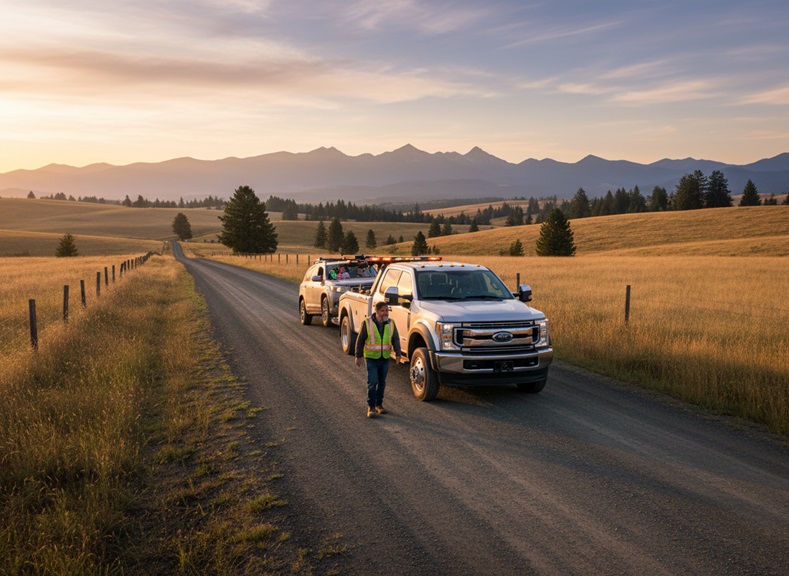
When you see the truck pull up, stay where you are until the driver signals it’s safe to approach. We’ll position the truck to protect you before handling the recovery.
Your driver will ask where to tow your car, then handle the rest. If you prefer not to ride in the truck, you can arrange other transport. Most of us are good company though, and we’ve heard every story there is.
At All Out Towing, our focus on highway breakdown safety WA means more than moving cars – it’s about getting people out of danger quickly and calmly.
What Happens Next
Once your car’s loaded, decide whether to tow it home or to your mechanic. If you’re shaken, have it taken somewhere safe and familiar. Many towing companies offer short-term storage while you sort repairs or insurance.
There’s no rush – the goal is getting you home safely.
Building Confidence for Next Time
No one plans to break down, but a little preparation makes a big difference.
Keep an emergency kit:
- High-vis vest
- Phone charger
- Water and a torch
Save your roadside assistance number, or have All Out Towing on speed dial.
Know your car basics: where the hazard button is, how to access the spare tyre, and how to open the bonnet. Small bits of knowledge reduce panic and save time.
Trust yourself. You now know the right steps: get off the road, get safe, call for help, and wait. That’s all that matters.
You’re Not Alone in This
Every year, thousands of WA drivers experience highway breakdowns. It’s frightening, it’s stressful, and it always feels like the worst timing. But it’s manageable and temporary.
The difference between a close call and a serious incident often comes down to those first decisions – getting off the road, keeping calm, and calling for professional help.
If you ever find yourself stuck on a WA highway, don’t hesitate to get in touch with our team. We’ve been doing this long enough to know that quick, professional response isn’t just about towing – it’s about keeping people safe.